What Is Market Capitalisation?
Market capitalisation (market cap) is the total market value of a company's outstanding shares. It is calculated by multiplying the current share price by the total number of shares in circulation.
Market Cap = Share Price × Shares Outstanding
For example, if a company has 500 million shares trading at £20 each, its market cap is £10 billion.
Size Classifications
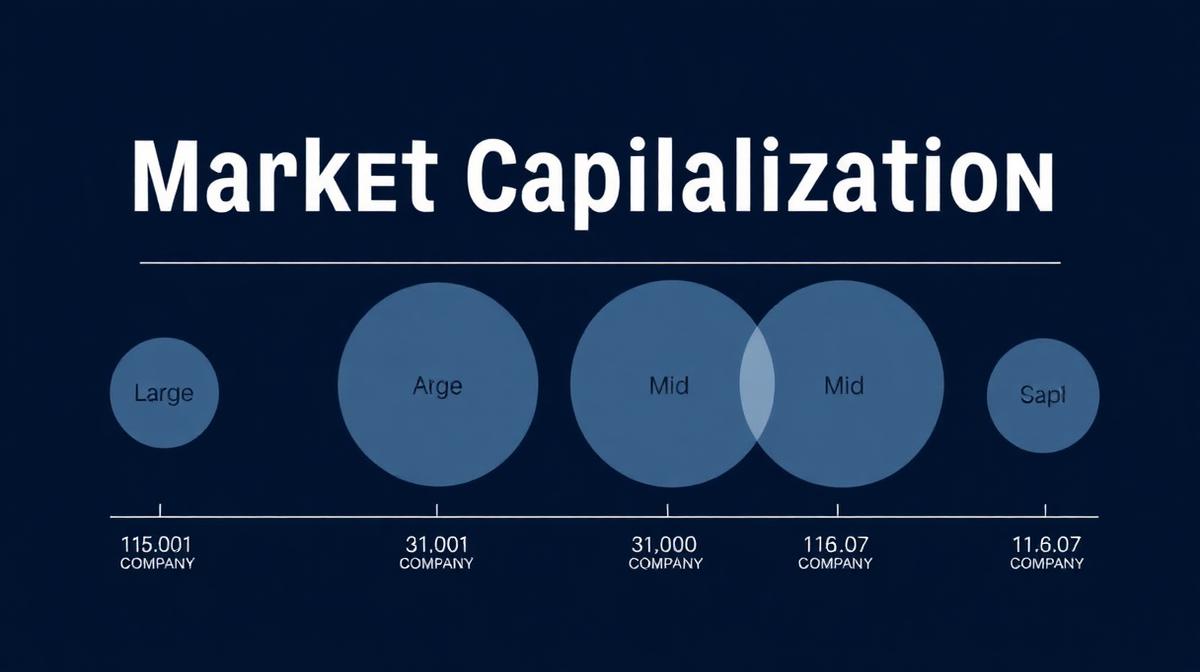
Companies are broadly categorised by their market cap:
- Large-cap (£10bn+): Established, stable companies with global operations. Examples: Shell, Unilever, AstraZeneca. Lower risk, moderate growth potential.
- Mid-cap (£2bn–£10bn): Growing companies with established market positions. Often found in the FTSE 250. Balance of growth and stability.
- Small-cap (£300m–£2bn): Younger or niche companies with significant growth potential but higher volatility and risk.
- Micro-cap (under £300m): Very small companies, often on AIM. Highest growth potential but also highest risk of failure.
Why Market Cap Matters
Market cap helps investors in several ways:
- Size comparison: Compare companies objectively regardless of share price
- Risk assessment: Larger companies are generally more stable; smaller ones more volatile
- Index eligibility: Determines inclusion in FTSE 100, FTSE 250, etc.
- Portfolio construction: Helps balance exposure across company sizes
Share Price vs Market Cap
One of the most common beginner mistakes is thinking a high share price means a company is large or expensive. This is incorrect.
Berkshire Hathaway's Class A shares trade at over $600,000 each, but it is not the world's largest company. Apple, with shares around $170, has a much higher market cap because it has far more shares outstanding.
Always use market cap — not share price — when comparing company sizes.
UK Market Context
The FTSE indices are constructed entirely by market cap:
- FTSE 100: The 100 largest UK-listed companies by market cap (reviewed quarterly)
- FTSE 250: Companies ranked 101st to 350th by market cap
- FTSE All-Share: Combines the FTSE 100, 250, and SmallCap indices
Limitations of Market Cap
Market cap has important limitations:
- It ignores debt — two companies with identical market caps can have vastly different financial health
- It reflects market sentiment, not necessarily fundamental value
- It can be inflated by hype or depressed by fear
- Enterprise value (market cap + net debt) often provides a more complete picture