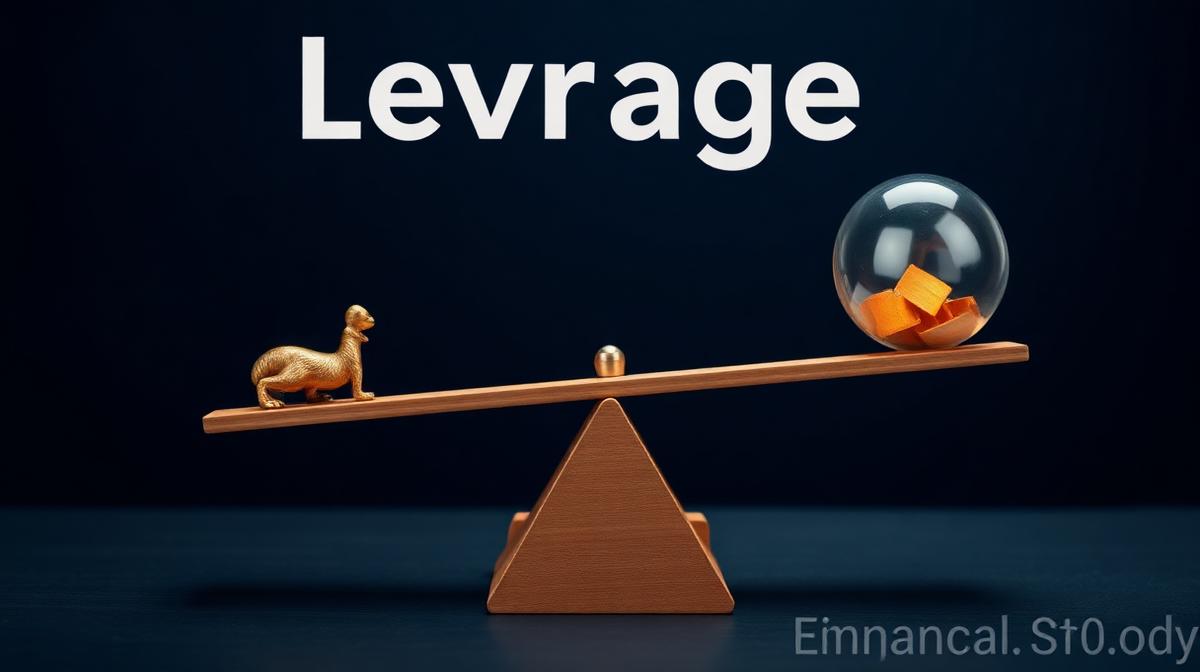
What Is Leverage?
Leverage in trading means using borrowed capital to increase the size of your market position beyond what your own funds would allow. Your broker effectively lends you the difference between your deposit (called margin) and the full position value.
For example, with 10:1 leverage, you deposit £1,000 as margin and control a £10,000 position. If the asset rises 5%, your profit is £500 — a 50% return on your actual £1,000 capital. However, if the asset falls 5%, you lose £500 — half your deposit.
How Leverage Ratios Work
Leverage is expressed as a ratio. Common levels and their margin requirements:
• 30:1 — 3.33% margin (£333 controls £10,000) — FCA max for major forex
• 20:1 — 5% margin — FCA max for minor forex, major indices
• 10:1 — 10% margin — FCA max for commodities
• 5:1 — 20% margin — FCA max for individual shares
• 2:1 — 50% margin — FCA max for cryptocurrency CFDs
Why Leverage Is Dangerous
The fundamental problem with leverage is that losses are calculated on the full position size, not your deposit. With 30:1 leverage, a mere 3.33% adverse move eliminates your entire margin. Markets can easily move this much in hours.
During the Swiss franc shock of January 2015, the EUR/CHF pair moved nearly 30% in minutes. Traders with leveraged positions faced catastrophic losses. Some brokers went bankrupt. This event led directly to the FCA implementing stricter leverage caps.
FCA Leverage Restrictions
Since 2019, the FCA has enforced strict leverage limits for retail traders to reduce consumer harm. These limits align with ESMA rules across Europe. Key protections include:
• Maximum leverage caps by asset class (detailed above)
• Mandatory negative balance protection — you cannot owe your broker money
• Margin close-out at 50% — positions are automatically closed if equity falls to 50% of required margin
• Prominent risk warnings showing the percentage of retail clients who lose money
Managing Leverage Risk
Use stop-loss orders: Set automatic exit points to limit your maximum loss on each trade.
Size positions conservatively: Risk no more than 1-2% of your account on any single trade.
Reduce leverage voluntarily: Just because 30:1 is available does not mean you should use it. Lower leverage gives your trades more room to breathe.
Monitor margin levels: Keep your account well above the margin close-out threshold.
Risk Disclosure: Trading and investing carries significant risk. CFDs carry high risk of rapid loss due to leverage. This is information only, not financial advice. Seek independent advice before investing.
Frequently Asked Questions
Is leverage the same as borrowing?
Effectively, yes. When you use leverage, your broker lends you the difference between your margin and the full position value. You pay for this through overnight financing charges on positions held past the end of the trading day.
Can I lose more than I deposit with leverage?
With an FCA-regulated broker, retail clients have negative balance protection — your account cannot go below zero. Without this protection (e.g., with offshore brokers), you could theoretically owe money beyond your deposit.
Should beginners use leverage?
No. The FCA and most financial educators recommend that beginners trade without leverage or use minimal leverage until they have developed consistent risk management skills and understand market dynamics.
What is a margin call?
A margin call occurs when your account equity drops below the required maintenance margin. Your broker will either request additional funds or begin closing your positions automatically to prevent further losses.
Do professional traders use high leverage?
Professional traders may access higher leverage but typically use it conservatively. Many institutional traders use far less leverage than the maximum available, focusing instead on position sizing and risk management.
Is leverage available on all trading products?
Leverage is available on CFDs, forex, spread bets, and some other derivatives. It is not available on traditional share purchases through a stocks and shares ISA or standard brokerage account.