What Are Options?
Options are financial contracts that give you the right — but not the obligation — to buy or sell an underlying asset at a predetermined price (the strike price) before or on a specific date (the expiry date). You pay a premium for this right.
There are two basic types of options:
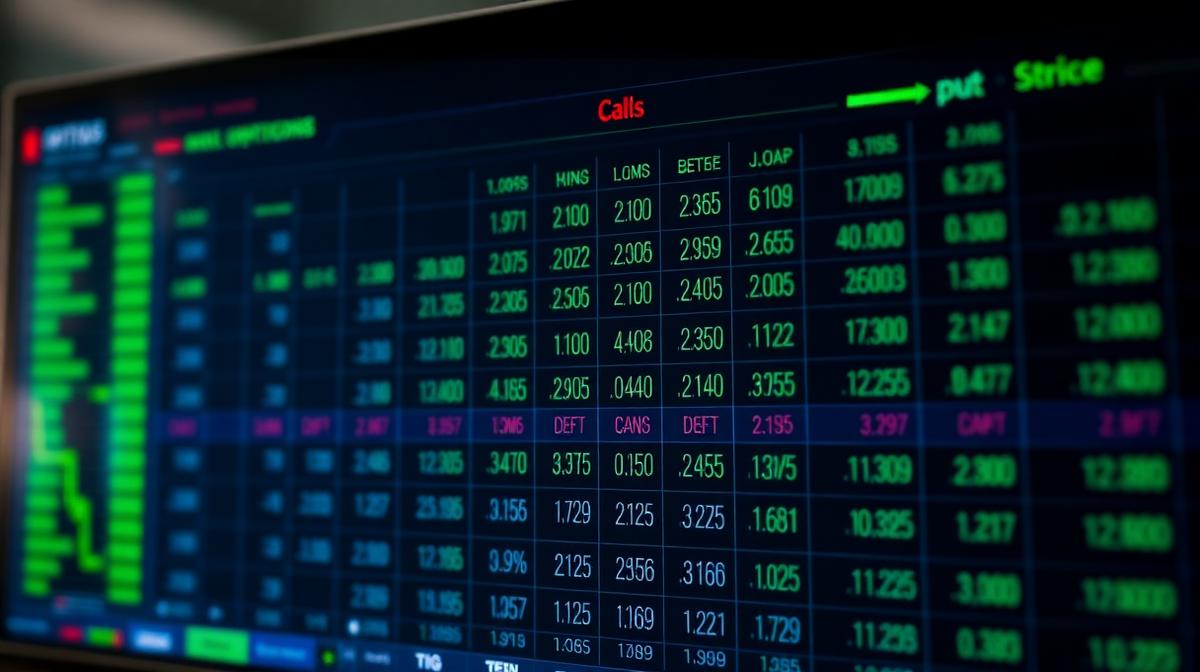
- Call options — Give you the right to BUY the underlying asset at the strike price. You profit when the asset price rises above the strike price plus the premium paid.
- Put options — Give you the right to SELL the underlying asset at the strike price. You profit when the asset price falls below the strike price minus the premium paid.
Key Options Terminology
Before trading options, you need to understand these essential terms:
- Strike price — The price at which you can buy (call) or sell (put) the underlying asset
- Premium — The price you pay to buy an option contract
- Expiry date — The date by which the option must be exercised or it expires worthless
- In the money (ITM) — A call option where the asset price is above the strike, or a put where it's below
- Out of the money (OTM) — A call where the asset price is below the strike, or a put where it's above
- At the money (ATM) — When the asset price equals the strike price
How Options Trading Works
When you buy an option, your maximum loss is limited to the premium you paid. This is one of the key advantages of options over other leveraged products like CFDs.
Example: Company X shares trade at £10. You buy a call option with a £10 strike price for a £0.50 premium. If the shares rise to £12, your option is worth £2, giving you a £1.50 profit (£2 minus the £0.50 premium). If the shares stay at or below £10, you lose only the £0.50 premium.
Options Trading in the UK
Options trading is available to UK investors through several channels:
- Exchange-traded options — Standardised contracts traded on exchanges like the London Stock Exchange or ICE Futures Europe
- CFD options — Contracts for difference based on options, offered by FCA-regulated brokers. These don't give you actual ownership of the option but let you speculate on its price movement.
- US options — Many UK brokers offer access to US options markets (NYSE, CBOE) where liquidity is deepest
Options profits in the UK are subject to Capital Gains Tax (CGT) unless traded via spread betting, which remains tax-free for most retail traders.
Basic Options Strategies
Here are four foundational strategies every options trader should know:
- Long call — Buy a call when you expect the price to rise. Risk is limited to the premium. Suitable for bullish views.
- Long put — Buy a put when you expect the price to fall. Risk is limited to the premium. Useful for bearish views or hedging.
- Covered call — Own the underlying shares and sell a call against them. Generates income from the premium but limits your upside. Popular among income-focused investors.
- Protective put — Own shares and buy a put as insurance. Limits your downside while keeping unlimited upside potential. Essentially an insurance policy for your portfolio.
Options vs CFDs
Both options and CFDs are leveraged products, but they differ significantly:
- Options have a defined maximum loss (the premium); CFDs can result in larger losses
- Options have fixed expiry dates; CFDs can be held indefinitely (with financing costs)
- Options pricing is more complex, involving factors like time decay and volatility
- CFDs are simpler to understand and more widely available from UK brokers
Risks and Considerations
While buying options limits your risk to the premium paid, there are important considerations:
- Time decay — Options lose value as they approach expiry, even if the underlying price hasn't moved
- Complexity — Options pricing involves multiple variables (price, time, volatility, interest rates) that can be difficult for beginners to grasp
- Liquidity — Some UK options markets have limited liquidity, leading to wide bid-ask spreads
- Selling options — While buying options limits risk, selling (writing) options can expose you to unlimited losses and should only be attempted by experienced traders