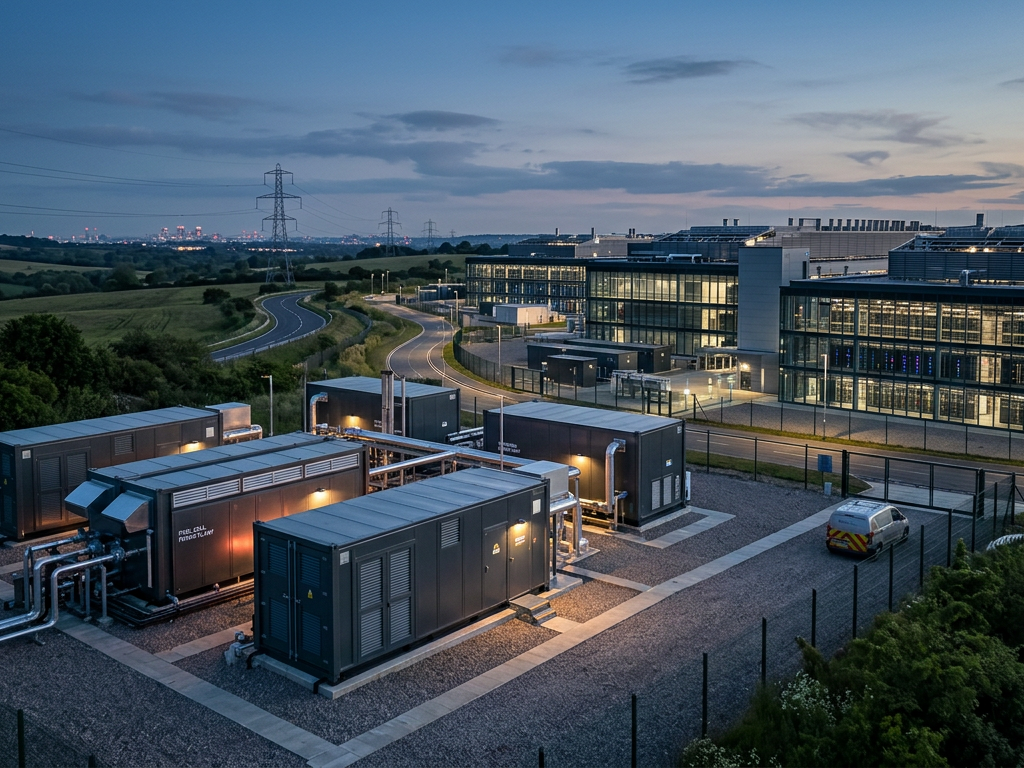
One of the most attractive aspects of fuel cell integration is the speed at which these power solutions can be brought online. Unlike traditional power infrastructure projects that can take years to complete, fuel cell installations can be operational in less than a year. This rapid deployment capability is crucial for tech giants facing an escalating demand for computational power due to the relentless expansion of AI applications and large language models.
Beyond speed, fuel cells offer superior energy efficiency compared to conventional power generation methods such as gas turbines. This enhanced efficiency translates into lower operational costs and a smaller environmental footprint, aligning with the sustainability goals that many prominent tech firms have publicly committed to. The move towards cleaner energy sources is a key driver for these investments.
Financial powerhouse Goldman Sachs has underscored the potential impact of this trend, forecasting that fuel cells could supply a substantial 8 to 20 gigawatts (GW) of data centre power globally by 2030. This projection highlights the scale of the transition underway and the confidence in fuel cell technology as a viable and sustainable power solution for the digital economy.
Several industry leaders are already actively implementing and expanding fuel cell projects. Companies such as Oracle, a global leader in cloud computing and enterprise software, and Equinix, a world-renowned provider of data centre and interconnection services, are at the forefront of this adoption. These firms are leveraging fuel cells to provide reliable, on-site power, ensuring uninterrupted operations for their critical AI-driven infrastructure.
FuelCell Energy, a prominent manufacturer of fuel cell technology, is also a key player in this evolving landscape. Their expertise and products are instrumental in enabling these large-scale deployments, facilitating the transition to more resilient and environmentally friendly power sources. The collaboration between tech giants and energy solution providers is accelerating the widespread adoption of fuel cell technology.
The surge in electricity demand from AI applications is a significant challenge for existing power grids. By generating power on-site, fuel cells reduce the strain on national grids, offering a decentralised power solution that enhances energy security and operational resilience. This is particularly relevant for the UK, where grid capacity and stability are ongoing considerations.
In conclusion, Big Tech's pivot towards fuel cells represents a significant advancement in powering the future of artificial intelligence. With benefits spanning rapid deployment, reduced emissions, improved efficiency, and enhanced grid independence, fuel cells are emerging as the preferred energy solution for data centres and AI infrastructure in the UK and globally. This trend is set to redefine the energy landscape for the technology sector.