
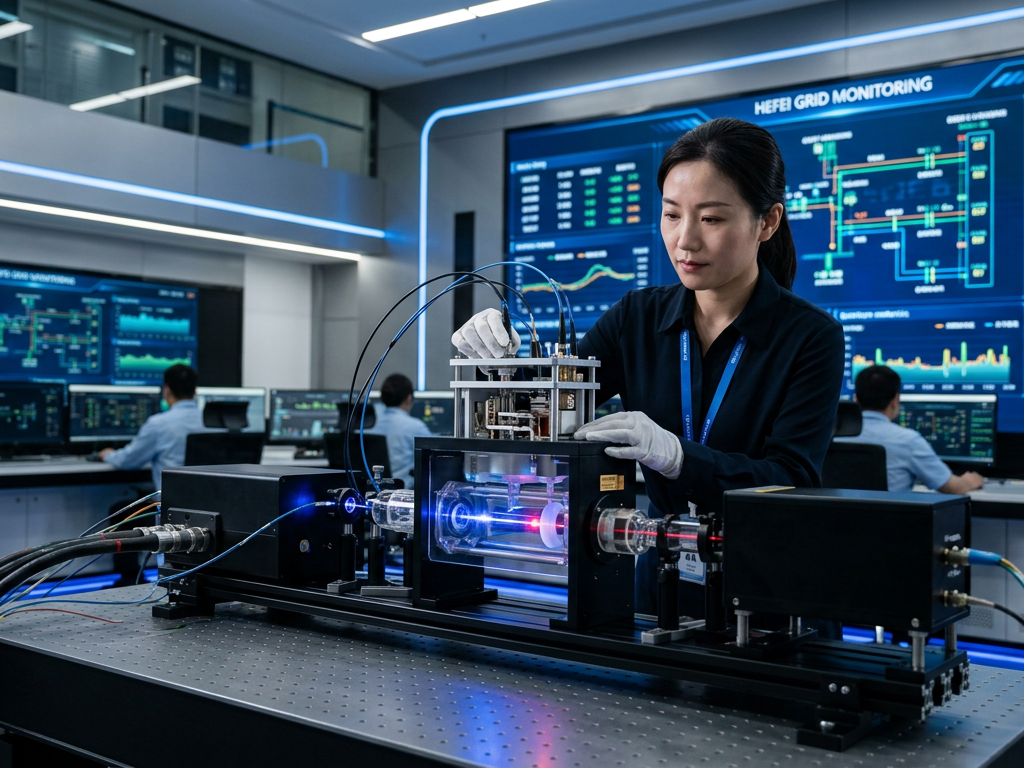
The deployment of quantum sensors represents a strategic move by China to bolster the resilience and efficiency of its national energy network. By detecting anomalies before they escalate into widespread disruptions, the technology promises to minimise downtime and ensure a more stable power supply for consumers and industries alike. This proactive approach to grid management is a key component of China's broader technological ambitions.
This quantum energy project is not an isolated endeavour but rather a critical front in a global technological race. Institutions and nations worldwide, from the prestigious Massachusetts Institute of Technology (MIT) in the United States to research hubs in Tokyo, Japan, are actively exploring how breakthroughs in quantum physics can be leveraged to improve energy systems and guarantee grid reliability. The competitive landscape underscores the immense potential and strategic importance of quantum applications in the energy sector.
For China, investing in quantum technology for its power grid is a multifaceted strategy. It not only addresses immediate operational challenges but also positions the nation at the forefront of quantum innovation. The successful implementation and scaling of such technology could set a new global standard for energy infrastructure management, offering a blueprint for other countries grappling with similar issues of grid stability and efficiency.
The implications of this technology extend beyond mere fault detection. By providing highly precise data on electricity flow and potential vulnerabilities, quantum sensors enable a more granular and sophisticated understanding of grid dynamics. This improved insight can facilitate better resource allocation, optimise energy distribution, and ultimately lead to a more sustainable and robust energy ecosystem. The long-term benefits could include reduced energy waste, lower operational costs, and enhanced national energy security.
The project in Hefei serves as a vital testbed for these quantum advancements. The data gathered from this pilot will be instrumental in refining the technology and planning its wider integration across China's vast power grid. The commitment to such high-tech solutions highlights China's dedication to modernising its essential services through scientific and technological leadership, ensuring a future-proof energy infrastructure that can meet the demands of a rapidly developing economy.