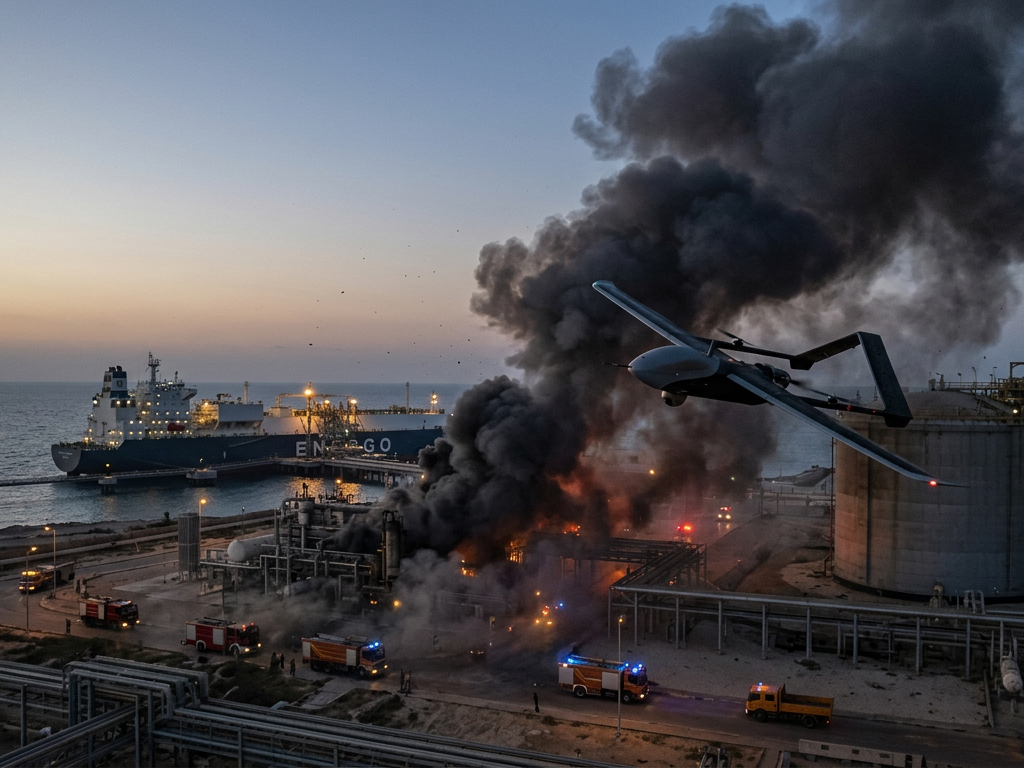
The swift response from the port authority ensured operations quickly resumed. However, Egyptian military investigators are now meticulously examining how the drones managed to breach multiple layers of air defence safeguarding one of the country's most critical and heavily guarded energy sites.
In the immediate aftermath, Egyptian officials have initiated direct communications with Tehran in an effort to identify the perpetrators of the drone launch. While Cairo is unlikely to opt for military retaliation, the incident underscores the escalating tensions in the region.
To mitigate the impact and prevent a recurrence of nationwide power shortages, Egypt has rerouted its liquefied natural gas (LNG) imports through its remaining floating regasification terminals. Furthermore, the nation is increasing its reliance on fuel oil and diesel to bolster its energy supply.
The attack at Damietta port coincides with a period of heightened regional instability. Tehran has previously launched missiles at US forces in Jordan and attacked ships in the Strait of Hormuz. Iranian strikes have also tragically resulted in a fatality in Kuwait, and Jordan reported intercepting five missiles. Following a five-night pause, the United States resumed attacks on Iran, with President Donald Trump ordering retaliatory strikes on IRGC targets, vowing to hit Tehran "very hard."
Adding to the complexity, Saudi and US forces have also targeted Iranian-backed groups in Iraq. This has prompted Baghdad to convene an emergency security meeting, issuing a stern warning against the use of Iraqi territory to settle regional disputes. The intricate web of alliances and conflicts in the Middle East continues to pose significant challenges to energy security and regional stability.