
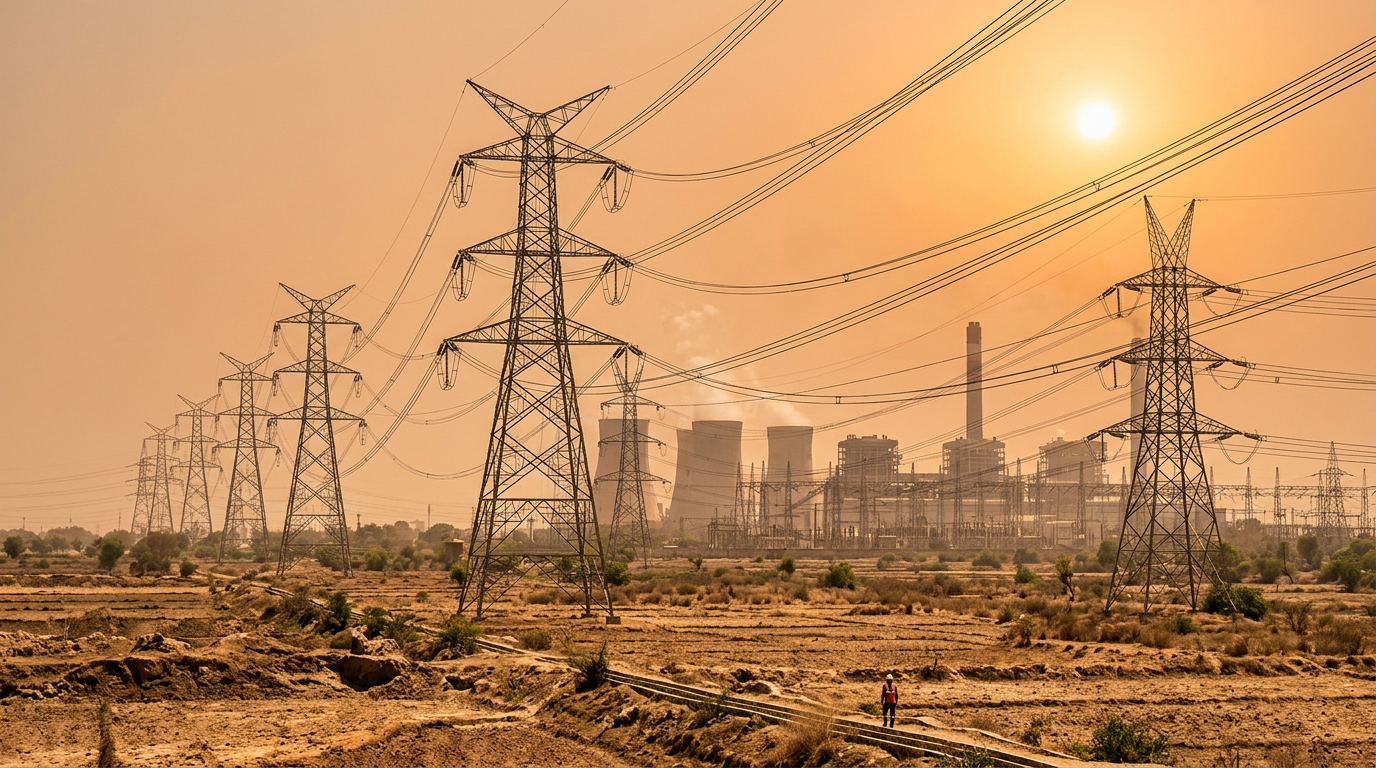
Official government data, as reported by Bloomberg, reveals that the country's peak power demand soared to 256 gigawatts (GW) on Saturday, surpassing the previous record of 252 GW set just the day before. These figures highlight a rapid escalation in energy requirements.
The records established this weekend comfortably eclipsed the previous all-time high of 250 GW, which was recorded in May 2024. This consistent breaking of records indicates a growing trend in India's energy consumption patterns, largely influenced by climatic conditions.
The early onset of heatwaves across various regions of India has necessitated a greater reliance on air conditioning and other cooling appliances. This increased usage directly correlates with the observed spikes in the national grid's load. The demand for cooling solutions is a primary factor in these record-breaking figures.
India, a rapidly developing economy, faces the recurring challenge of balancing robust economic growth with environmental considerations and energy supply. The nation's power infrastructure is frequently tested during peak demand periods, particularly during the hot summer months.
Managing such high demand levels requires substantial investment in power generation, transmission, and distribution networks. The government and utility providers are under pressure to ensure a stable and reliable electricity supply to prevent blackouts and support public health during extreme weather.
This trend underscores the need for India to accelerate its transition to renewable energy sources, which can offer a more sustainable and resilient power supply in the long term. While coal-fired power plants still form a significant part of India's energy mix, the push towards solar and wind power is gaining momentum.
Investment in smart grid technologies and energy efficiency measures will also be crucial in mitigating future demand surges. Encouraging energy conservation among consumers could also play a part in managing these peaks.
The economic implications of sustained high energy demand are significant. Increased power generation often translates to higher operational costs for utilities, which can eventually impact consumer tariffs. Furthermore, the reliance on fossil fuels during such periods contributes to carbon emissions, posing an environmental challenge.
As India continues its path of development and climate change influences weather patterns, understanding and adapting to these energy demand trends will be paramount for national energy security and environmental sustainability. The current heatwave serves as a stark reminder of the critical importance of a robust and adaptable energy sector.