
At the forefront of the market's reaction, West Texas Intermediate (WTI) crude futures saw a notable rise, climbing by $1.45 to reach $83.58 per barrel, marking a 1.77% increase. Similarly, the international benchmark, Brent crude, also experienced a robust gain, adding $1.54 to trade at $89.26 per barrel, a 1.76% jump. These movements reflect heightened investor anxiety regarding geopolitical stability and its direct impact on energy supply chains.
The decline in hopes for improved US-Iran relations often translates to a perception of increased risk for oil transit routes and potential Iranian oil supply, which remains under sanctions. Any reduction in the likelihood of these sanctions being eased tightens the global supply outlook, even if actual supply hasn't yet been affected. Traders are pricing in a higher risk premium to account for potential future instabilities.
Further demonstrating the broad-based bullish sentiment in the crude sector, Murban Crude, a key grade from Abu Dhabi, surged by $4.65, achieving a 5.79% increase to $84.90 per barrel. This strong performance across various crude types underscores the market's sensitivity to geopolitical developments emanating from the Gulf region.
Conversely, natural gas prices showed a slight downturn, with futures dipping by $0.011 to $2.783, a 0.39% decrease. This divergence highlights the distinct supply-demand dynamics and regional influences that often separate gas markets from global crude trends.
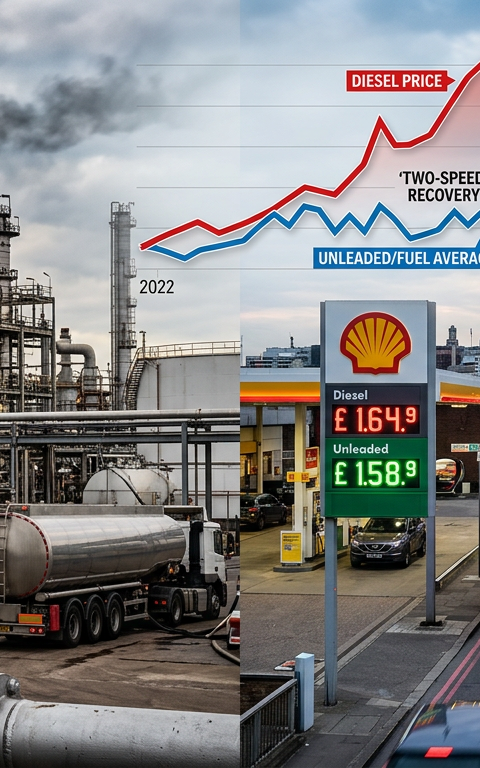
Refined products also felt the upward pressure, albeit more moderately. Heating oil futures rose by $0.063, a 1.50% increase, to $4.253. Gasoline futures followed suit, inching up by $0.027, or 0.87%, to $3.163. These increases reflect the higher cost of crude input, which inevitably filters down to consumer-facing fuel prices.
The broader energy market remains on edge, with participants closely monitoring diplomatic signals and any developments that could impact the delicate balance of global oil supply and demand. Geopolitical risks, particularly those involving major producers like Iran, continue to be a dominant factor in determining price trajectories in the commodity space.