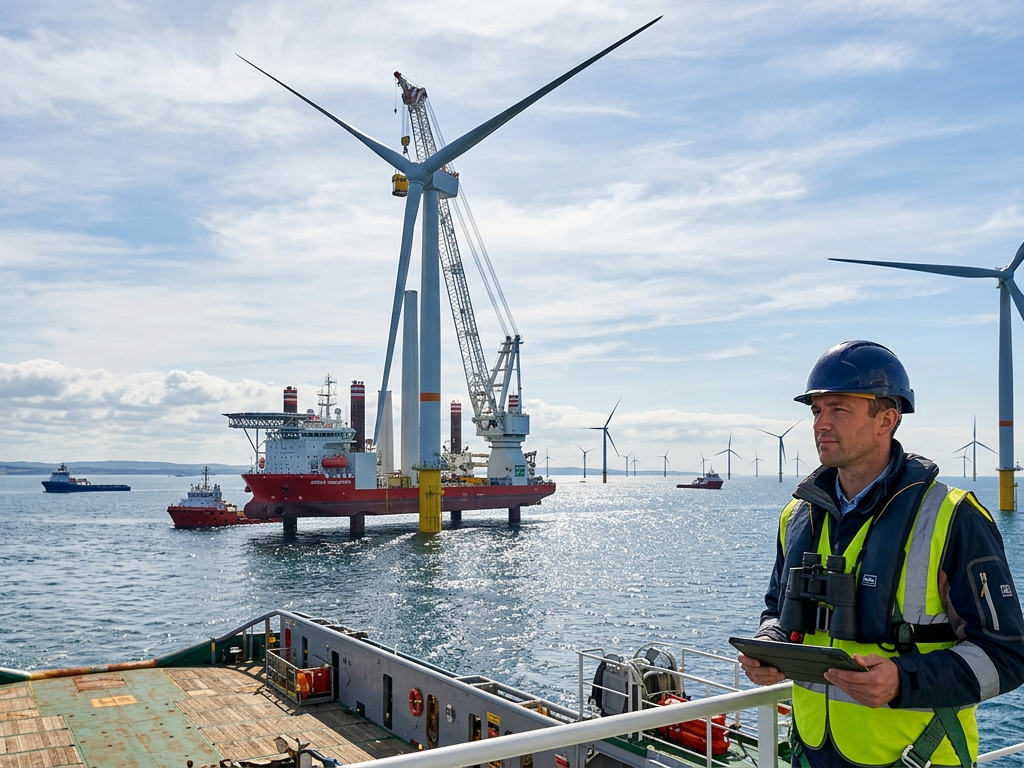
The latest advancements include the development of significantly larger blades and the construction of taller turbine towers. These structural improvements enable turbines to capture more wind energy, particularly at higher altitudes where wind speeds are consistently stronger and less turbulent. The increased sweep area of these larger blades directly translates into higher power output, making wind farms more productive than ever before.
Modern wind turbines are also being equipped with sophisticated sensor technology. These advanced sensors continuously monitor wind conditions, blade performance, and structural integrity, allowing for real-time adjustments to optimise energy capture and minimise operational downtime. The integration of artificial intelligence and machine learning further refines these processes, predicting maintenance needs and maximising output.
A groundbreaking development is the advent of floating offshore wind technology. This innovation is a game-changer for the UK, as it unlocks vast wind resources in deeper waters where traditional fixed-bottom turbines are economically unfeasible to install. Floating platforms can be moored in locations previously inaccessible, significantly expanding the potential for offshore wind generation and bolstering energy security.
Looking further ahead, experimental technologies promise even more radical shifts. Airborne wind systems, for example, involve kites or drones tethered to the ground, designed to harness high-altitude winds that are stronger and more consistent than those near the surface. These systems could be deployed in a wider range of geographical locations, including those poorly suited for conventional turbine installations due to space constraints or wind patterns.
Another intriguing development is the concept of bladeless wind turbines. These innovative designs, often utilising oscillating structures, aim to generate electricity from wind vibrations rather than rotational movement. While still in their early stages, bladeless turbines could offer advantages in terms of reduced visual impact, lower noise pollution, and potentially simpler maintenance, opening up new possibilities for wind energy generation in urban or environmentally sensitive areas.
The continuous evolution of wind turbine technology, from incremental improvements in blade design and tower height to revolutionary floating offshore solutions and experimental airborne systems, underscores a strong commitment to sustainable energy. These engineering marvels are not just reinvention; they are a vital investment in a cleaner, more energy-secure future for the UK and beyond, positioning wind power as a cornerstone of the global energy transition.