
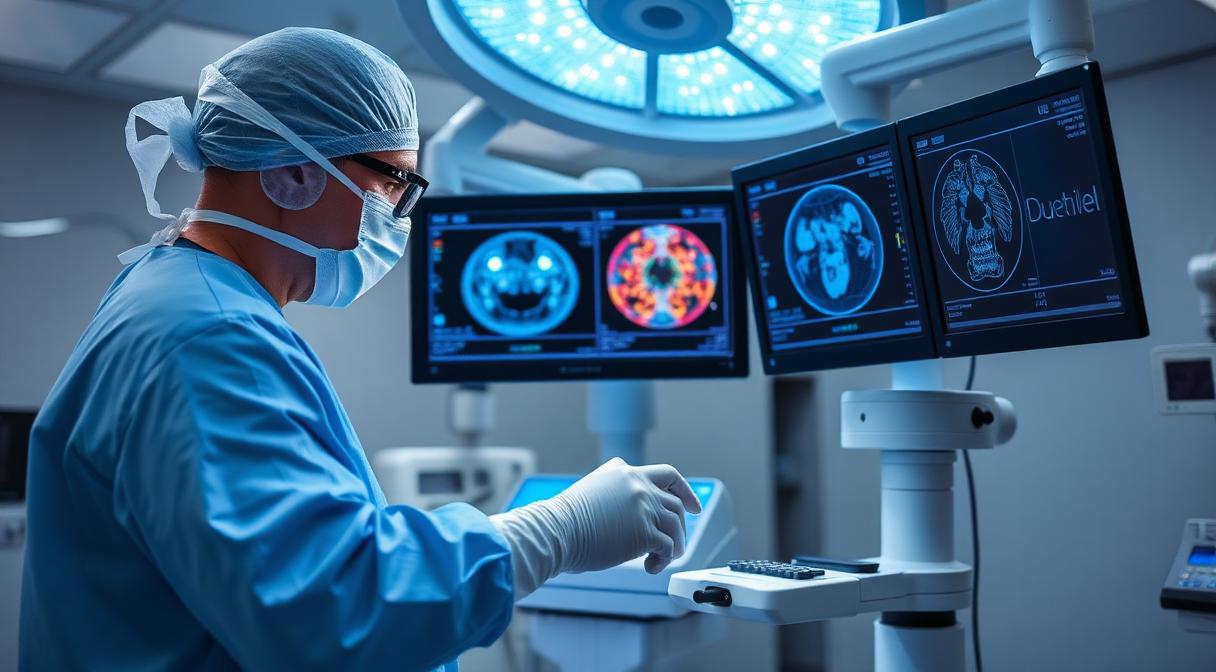
When a hospital buys a surgical robot and trains its surgeons to use it, something quiet but powerful happens: switching to a rival becomes slow, costly, and risky. Surgeons are trained on one system; the instruments and service contracts follow. That stickiness — economists call them switching costs — is the central reason many medical device companies earn steady, defensible profits. They sell the machine once, then sell the instruments and consumables that feed it for years.
Part 4 of 8
Med-tech hardware
4 Jun 2026The devices: the hardware that keeps the body running
Medical device companies explained — Intuitive Surgical, Abbott, Stryker, Medtronic — robots, implants, monitors, switching costs, and recall risk.
Key Takeaways
- 1This article covers key developments in the crypto market
- 2Always verify claims with official FCA and regulatory sources
- 3Past performance does not guarantee future results
- 4Consider speaking to a qualified financial adviser before acting
- 5TradeRadarNews provides information only — not financial advice
Pacemakers, surgical robots, glucose monitors, replacement joints — the devices link makes the physical hardware medicine runs on, often sold on a razor-and-blade model.
Where this sits in the chain
The Devices link sits between The Tools upstream (which supply components and overlap in diagnostics) and The Providers downstream (the hospitals and surgeons who actually use the hardware). For the full map, start at The System.
What this link is
- The razor-and-blade model again. As in the tools link, the real value often lies in the recurring sales — the instruments, leads, sensors, and cartridges a device consumes — not the one-off equipment sale.
- FDA clearance versus approval. In the US, lower-risk devices are cleared (shown similar to an existing product), while higher-risk ones need fuller approval. The distinction shapes how fast a device reaches market and how high the regulatory bar sits.
- Recall risk. Because these products go into or onto the body, a safety problem can trigger a recall — costly, and damaging to trust.
The companies
Intuitive Surgical (ISRG)
What they do: The surgical-robot standard. Its da Vinci systems are used in millions of minimally invasive operations, with recurring revenue from instruments and services. The numbers: [refresh: latest quarter; procedure-volume growth; installed system base]. The edge: a large installed base, deep surgeon training, and recurring per-procedure revenue — switching costs in their purest form. The risk: a premium valuation that prices in years of growth, and new entrants finally bringing rival surgical robots to market.
Abbott (ABT)
What they do: a diversified device and diagnostics company whose continuous glucose monitor (Libre) is a major growth engine for people managing diabetes. The numbers: [refresh: latest quarter; Libre sales growth]. The edge: diversification across devices, diagnostics, and nutrition, with a standout product in glucose monitoring. The risk: competition in glucose monitoring is intensifying, and the company carries some product-litigation exposure.
Stryker (SYK)
What they do: a leader in orthopaedics (replacement hips and knees) and surgical equipment. (Boston Scientific, BSX, is a close peer in cardiology-focused devices.) The numbers: [refresh: latest quarter; organic growth]. The edge: scale in high-volume orthopaedic procedures that rise with an ageing population. The risk: hospital capital-spending cycles — when budgets tighten, big equipment purchases get delayed.
Medtronic (MDT)
What they do: the largest pure-play device maker, spanning cardiac, diabetes, and neurological products. (Medtronic is Irish-domiciled but trades as an S&P 500 member.) The numbers: [refresh: latest quarter; organic growth; FX impact]. The edge: breadth across many therapy areas and a vast global footprint. The risk: years of slow growth and execution concerns have dogged the company, and its global mix exposes it to currency swings.
Context, not a separate profile. Johnson & Johnson has a large MedTech arm, but J&J is profiled at home in The Discovery. Siemens Healthineers and Philips are major device makers too, but sit outside the US index.
The bull and bear case
The bull case: switching costs and recurring consumables make for durable, defensible revenue; an ageing population means more procedures; and innovation (robotics, monitoring) keeps opening new markets.
The bear case: device sales lean on hospital budgets, which are cyclical; recalls and litigation are ever-present; and the best names often trade at premium valuations that leave little room for disappointment.

What feeds it, what it feeds
The Devices link is fed by The Tools and feeds The Providers who use the hardware on patients. The demographic and innovation currents behind rising procedure volumes are gathered in The Forces. Back to the map: The System. Next, the people who actually deliver the care — The Providers.
This article is for information only and is not investment advice or a recommendation to buy or sell any security. [Publication] is not a licensed financial adviser. Figures are accurate as of June 2026 and will change. Markets carry risk, including loss of capital. Rules, taxes, and available products differ by country — do your own research and consider a locally regulated professional.
Risk Warning: Trading and investing carries significant risk. Your investments can fall as well as rise. CFDs carry high risk of rapid loss due to leverage. Cryptocurrency is not FCA-regulated and not covered by FSCS. This is information only, not financial advice. Seek independent advice before investing.
Written by
TradeRadarNews Team
Editorial Team
Our editorial team covers markets, fintech, and regulatory developments across the UK and globally.