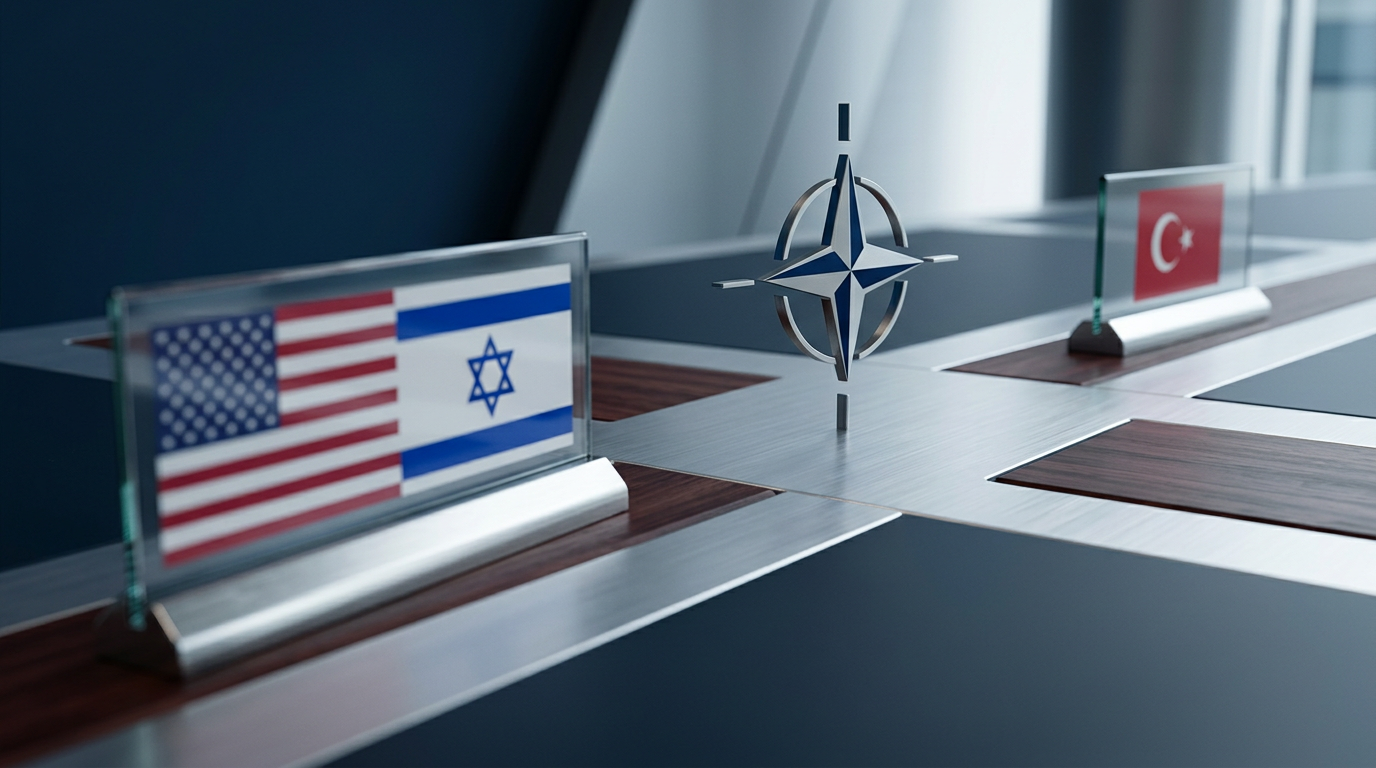
Benjamin Netanyahu is now publicly attempting to link President Erdogan's administration to Iran and its proxies. This strategy is amplified by a vigorous public relations campaign, with some US media outlets reportedly adopting narratives originating from Israeli 'think tanks'. These narratives question Turkey's continued role within NATO, citing alleged connections to Hamas and the Muslim Brotherhood.
This Israeli initiative to portray Turkey as a destabilising force within the alliance is viewed by many as a calculated and potentially hazardous manoeuvre. There's a heightened concern that American policymakers and the public are particularly susceptible to Israeli interpretations of challenging allies as detrimental to collective security interests. Ankara is actively working to counter these rapidly spreading assertions, which are perceived as an attempt to create a rift between Washington and Ankara during a sensitive geopolitical period.
The core of Israel's argument revolves around the concept of the Muslim Brotherhood, using it as a broad categorisation to link disparate entities under a single, unified threat narrative. This approach aims to conjoin Hamas, Turkey, and Qatar within the same ideological framework. This message is then aggressively disseminated within American and European policy circles, often presented with the academic veneer of 'think tank' research.
Organisations such as MEMRI are cited as examples of platforms used to propagate these narratives. The ultimate goal, it is argued, is to brand rivals like Turkey as being aligned with Islamist militancy. While acknowledged as a potent form of propaganda, particularly effective in Washington D.C., critics contend it lacks substantive basis. The Muslim Brotherhood, for instance, is not a monolithic or centrally controlled entity, making a blanket association misleading.
This strategy, if successful, could have significant implications for regional stability and the cohesion of NATO. The United Kingdom, as a key NATO member and a close US ally, will be observing these developments keenly. The potential for strained relations between two pivotal NATO states, driven by external influence, presents a complex challenge for international diplomacy and security. It underscores the importance of scrutinising geopolitical narratives, particularly those designed to reshape alliances.