
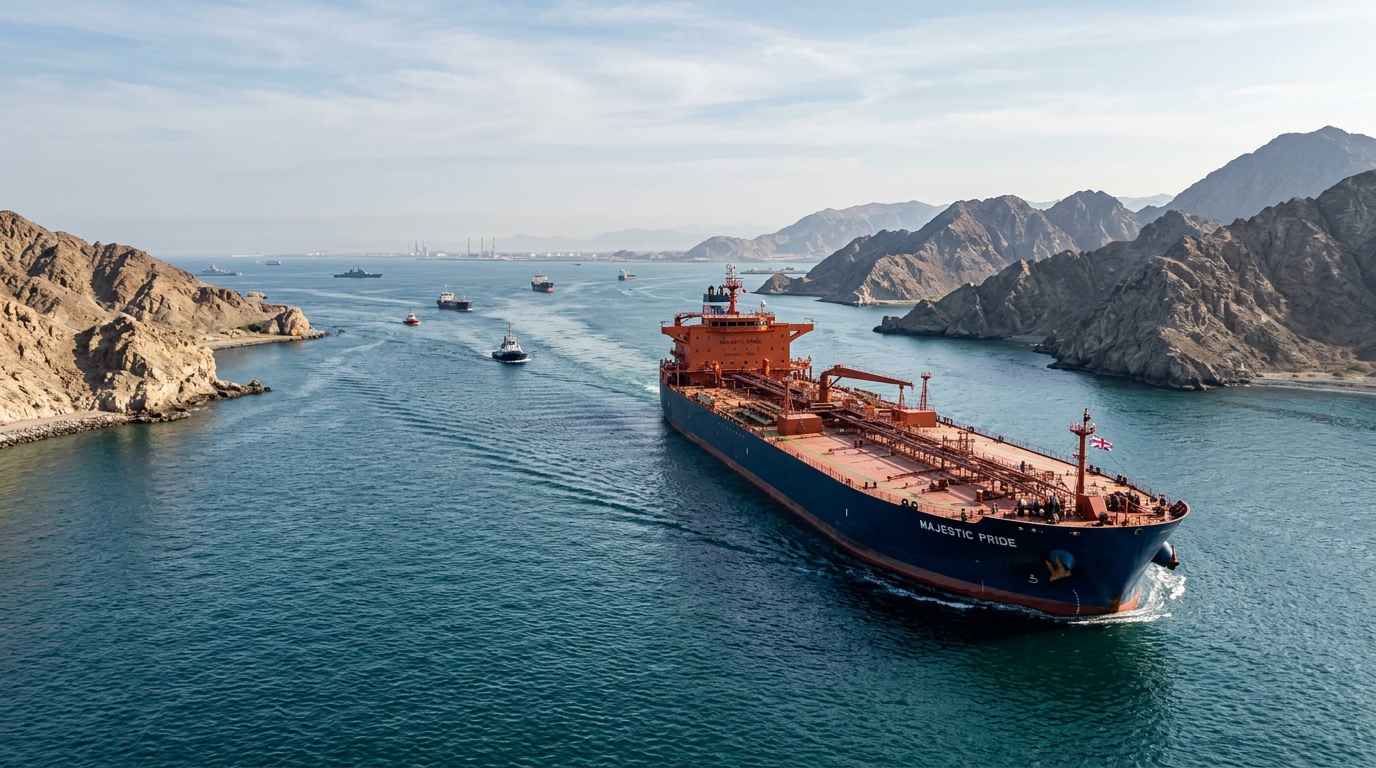
The reopening of the Strait of Hormuz is a pivotal moment for the energy market, offering a potential easing of geopolitical tensions and a smoother flow of crude oil from the Middle East to global markets. The strait, a narrow waterway between the Persian Gulf and the Gulf of Oman, is vital for the transportation of a significant portion of the world's seaborne oil.
Market reactions have been immediate and varied. WTI Crude is currently trading at 84.45, an 10.81% decrease, while Brent Crude stands at 90.48, down by 8.96%. Murban Crude has also seen a substantial fall of 11.10% to 90.38. These declines suggest that the increased supply potential from the reopening of Hormuz may be outweighing other market factors, at least in the short term.
In contrast, Natural Gas has shown a modest gain, increasing by 1.17% to 2.678. This divergence highlights the complex interplay of factors influencing different energy commodities. Heating Oil is down by 10.65% to 3.425, and Gasoline has decreased by 4.92% to 3.008, indicating broader weakness across refined products.
Regional blends like WTI Midland are also feeling the pressure, dropping by 11.97% to 86.70. The global oil basket prices, such as the OPEC Basket at 104.8 and the Indian Basket at 110.6, have shown marginal gains over the past two days, suggesting a more stable, albeit subdued, long-term outlook following recent volatility.
This heightened activity in the Strait of Hormuz will be closely watched by analysts and traders alike. Any sustained and uninterrupted flow through this critical waterway could have a calming effect on the market, although geopolitical risks in the region remain a significant wild card. The stability of oil supply routes is paramount for global economic health, and the current movements are a cautious step towards that stability.