TradeRadar logo
    Home/News/Crypto/US Drought Threatens Spring Crops, Sparks Price Surge Fears
    Crypto
    17 Apr 2026, 20:02

    US Drought Threatens Spring Crops, Sparks Price Surge Fears

    Worst US drought in decades threatens spring crops like wheat and rice, potentially pushing beef prices to record highs. UK markets brace for impact.

    Key Takeaways

    • 1This article covers key developments in the crypto market
    • 2Always verify claims with official FCA and regulatory sources
    • 3Past performance does not guarantee future results
    • 4Consider speaking to a qualified financial adviser before acting
    • 5TradeRadarNews provides information only — not financial advice
    US Drought Threatens Spring Crops, Sparks Price Surge Fears
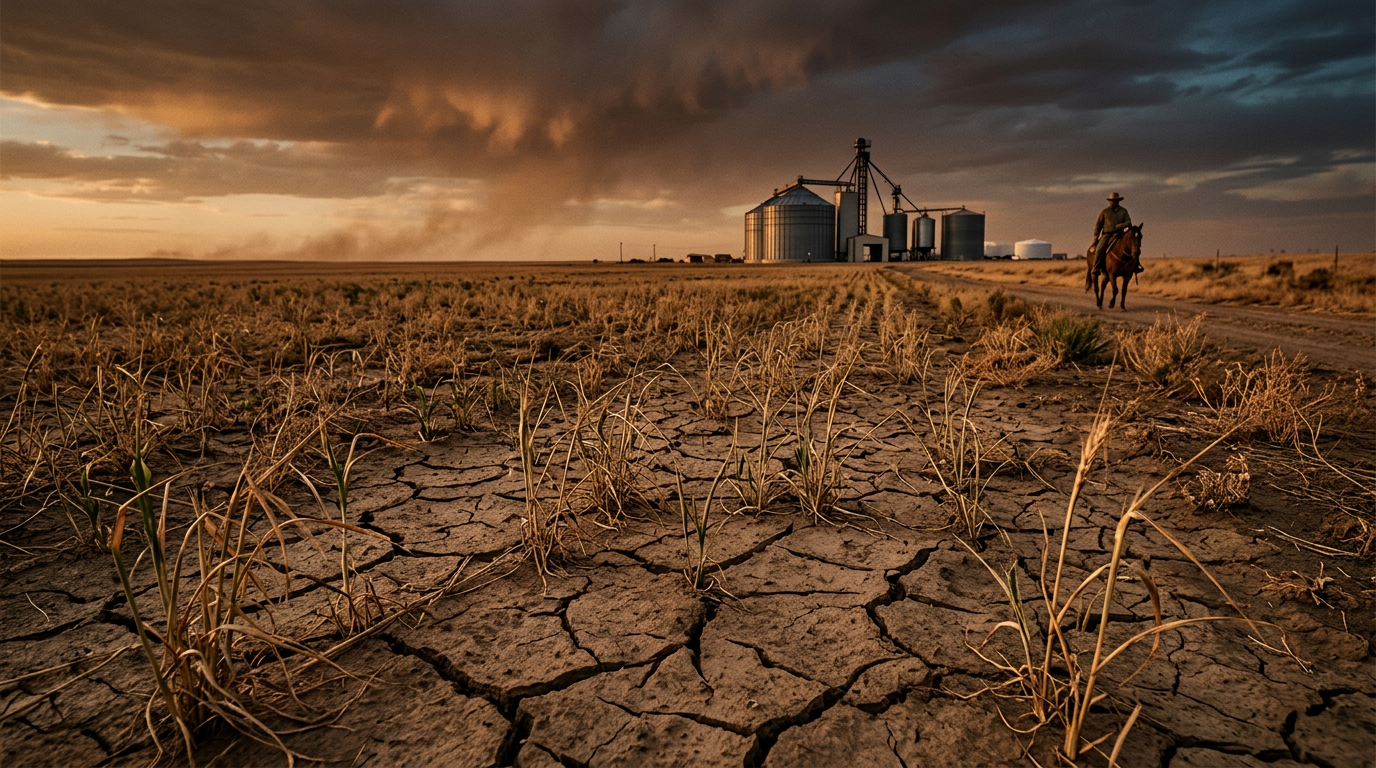
    The United States is currently facing its most severe drought in decades, a situation that is raising significant concerns for the upcoming spring planting season. According to the National Oceanic and Atmospheric Administration (NOAA), a staggering 60% of the contiguous Lower 48 states are experiencing drought conditions as of April 2026. This widespread dryness is poised to exert considerable pressure on key agricultural commodities, including sugarcane, rice, peanuts, and wheat, potentially impacting global food supply chains.

    The implications of this extensive drought extend beyond staple crops. The US cattle herd has already dwindled to its lowest levels since the 1950s, a testament to previous adverse weather conditions and market factors. Should the current drought persist or intensify, further reductions in herd sizes are almost inevitable. Such a scenario would likely trigger a sharp increase in beef prices, potentially pushing them to unprecedented highs and creating a significant burden for consumers both domestically and internationally.

    Water availability, crucial for agricultural productivity, is also severely compromised. A diminished mountain snowpack, particularly across the western US, is threatening vital irrigation systems. regions that rely heavily on snowmelt for water supply are already experiencing cutbacks. Examples include the Yakima Basin in Washington state and the critical Colorado River basin, which services multiple states. These restrictions will undoubtedly affect crop yields and livestock rearing in these agricultural heartlands.

    For UK consumers and businesses, these developments could translate into higher import costs for various food products and livestock feed. The interconnectedness of global markets means that agricultural disruptions in one major producing nation, such as the US, inevitably ripple outwards, impacting prices and availability worldwide. Food security and inflationary pressures are key considerations for financial analysts and policymakers in the UK as they monitor the unfolding situation across the Atlantic.

    The ongoing drought serves as a stark reminder of the increasing volatility of weather patterns and their direct impact on commodity markets. Investors and traders are closely watching agricultural futures, anticipating potential price spikes in response to reduced supply forecasts. The long-term implications for climate change adaptation and resilient food systems are becoming ever more apparent, prompting calls for sustainable agricultural practices and diversified sourcing strategies.


    📺 Related Videos

    Bitcoin Explained Simply

    Bitcoin Explained Simply

    📺 Coin Bureau

    How Does Cryptocurrency Work?

    How Does Cryptocurrency Work?

    📺 Simply Explained

    Finance Podcasts

    Written by

    TradeRadarNews Team

    Editorial Team

    Our editorial team covers markets, fintech, and regulatory developments across the UK and globally.

    Frequently Asked Questions

    Back to Crypto News

    Risk Warning: Trading and investing carries significant risk. Your investments can fall as well as rise. CFDs carry high risk of rapid loss due to leverage. Cryptocurrency is not FCA-regulated and not covered by FSCS. This is information only, not financial advice. Seek independent advice before investing.

    We use cookies to improve your experience.