Applications vs. Hype: What Quantum Computers Will (and Won't) Do
Which quantum computing applications are genuinely promising and which are overhyped, from chemistry and materials to optimization, finance, and AI.
Key Takeaways
1This article covers key developments in the crypto market
2Always verify claims with official ASIC and regulatory sources
3Past performance does not guarantee future results
4Consider speaking to a qualified financial adviser before acting
5TradeRadarNews provides information only — not financial advice
Article 7 of 9 — Foundations of Quantum Computing
"Quantum computing will revolutionize medicine, finance, logistics, artificial intelligence, and more." You've seen the sentence; it appears in nearly every quantum press release and marketing deck. Some of it is grounded in real science. Much of it is wishful extrapolation. This article does something the breathless coverage rarely does: sorts the proposed applications by how realistic they actually are, using the foundations built earlier in the series — that speed-ups are problem-specific (Article 5) and that useful, error-corrected hardware remains a substantial distance away (Article 4).
The basics survey the main proposed applications and grade them. Going Deeper examines why the gap between promise and delivery is so persistent, and how to read application claims.
The basics: the strongest case — simulation
The most credible application is simulating quantum systems — molecules, chemical reactions, and materials. This is quantum computing's home turf: because the machine is itself quantum, it's naturally suited to modelling other quantum phenomena that overwhelm classical computers. Potential payoffs include better understanding of chemical processes for drug discovery, catalysts, and novel materials (batteries, superconductors).
The honest caveat: realizing this at a useful scale needs fault-tolerant machines well beyond today's. Near-term results are mostly research demonstrations, not products. But of all the proposed uses, simulation rests on the firmest theoretical ground and excites the most serious scientists.
The basics: the heavily hyped — optimization, finance, and AI
Optimization (routing fleets, scheduling, supply chains) is the application most often promised to businesses, because optimization problems are everywhere and expensive. But the reality is more guarded: the theoretical quantum speed-ups for most practical optimization problems are modest at best (often quadratic, per Article 5), classical optimization methods are already very good and keep improving, and clear, durable quantum advantage on real-world optimization has been hard to demonstrate. This is the area where marketing most outruns evidence.
Finance (portfolio optimization, risk analysis, derivative pricing via quantum versions of Monte Carlo methods) inherits the same caution. There are interesting theoretical speed-ups, but they're often modest, sensitive to the cost of loading data into the machine, and unproven at useful scale. Promising as a research direction; speculative as a near-term business case.
Machine learning / "quantum AI" is the most hyped and least proven of all. The phrase sounds powerful, but whether quantum computers offer a genuine, general advantage for machine learning remains an open research question, and several proposed advantages have been undercut by improved classical methods. Treat sweeping "quantum AI will transform everything" claims with the most skepticism.
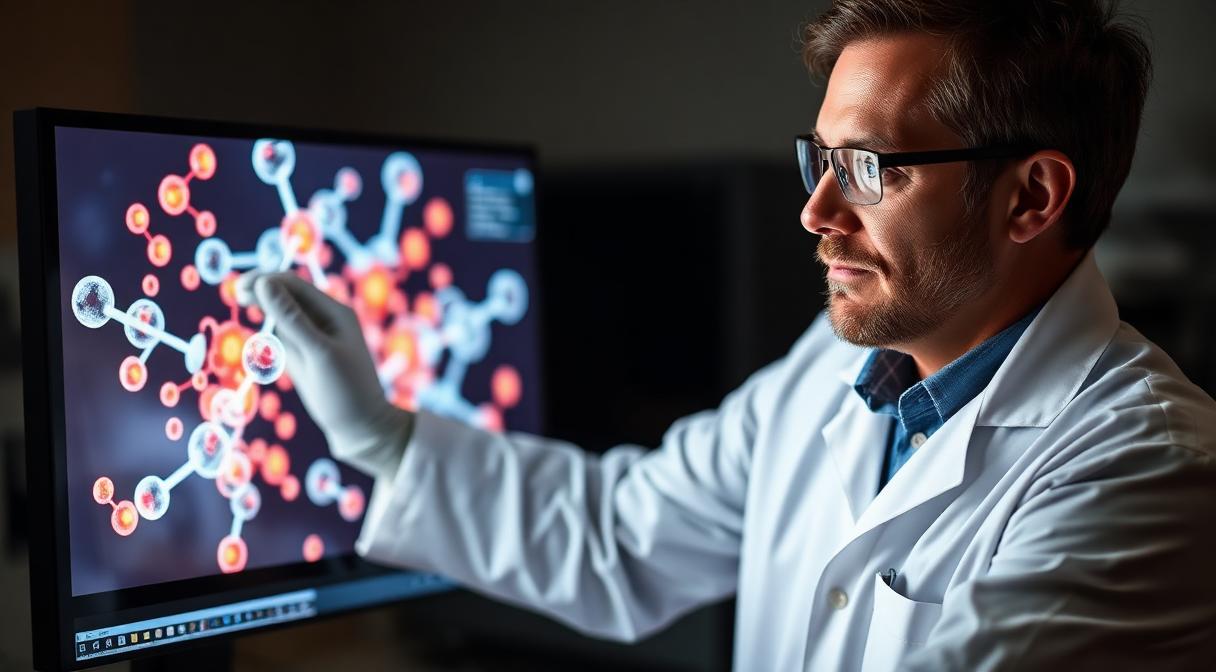
Chemistry and optimisation are the most realistic near-term applications. Image generated for editorial use.
The basics: a rough grading
A fair summary of the consensus among sober researchers:
Most promising: simulation of chemistry and materials.
Genuine but specialized: cryptography-related impact (Article 6) and certain narrow scientific problems.
Plausible but uncertain: some optimization and finance problems, pending better hardware and clearer advantage.
Most overhyped: broad "quantum machine learning" and claims of near-term, economy-wide transformation.
Across all of them runs one constraint: today's noisy machines can't yet deliver these payoffs, and the timeline depends on error-correction progress no one can schedule with confidence.
Going deeper: why the gap persists
For readers who want the deeper picture, several forces keep promise ahead of delivery.
The resource gap, again. Many touted applications quietly assume large, fault-tolerant machines that don't exist. A speed-up that's real in theory may require thousands of logical qubits — and thus, with error-correction overhead, an enormous number of physical ones. "Quantum could solve X" too often means "a machine we can't yet build could solve X." Always ask what hardware the claim assumes.
Classical computers keep improving — "dequantization." In several cases, the discovery of a proposed quantum advantage prompted researchers to find a classical algorithm that did nearly as well, erasing the gap. Because the classical baseline keeps rising, a quantum advantage that looks solid today can be neutralized tomorrow. This dynamic is especially common in the machine-learning and optimization claims.
Data loading is an underrated bottleneck. Many proposed applications need to load large classical datasets into the quantum machine, and that loading step can itself be so slow that it cancels the algorithm's advantage. This unglamorous problem quietly sinks a lot of otherwise exciting finance and machine-learning proposals.
Demonstration ≠ commercial value. A research paper showing a quantum method works on a small instance is genuine science but a long way from software that beats classical tools on a real problem at real scale, economically. The history of the field is full of demonstrations that didn't translate into products — not because the science was fake, but because the leap to practical value is enormous.
The fair conclusion: quantum computing is real science with real long-term potential, concentrated most credibly in simulation. But the closer a claim gets to "near-term, broad, economy-changing," the more skepticism it deserves.
The distinctive 'chandelier' wiring of a superconducting quantum processor. Image generated for editorial use.
The takeaway
Quantum computing's most credible application is simulating chemistry and materials — its natural home — though even that needs hardware beyond today's. Optimization and finance are plausible but uncertain and often oversold, while "quantum AI" is the most hyped and least proven. Every serious application is gated by error-correction progress that can't be scheduled with confidence, and the classical baseline keeps rising. Real potential, concentrated and long-term — not the imminent, universal revolution the marketing implies.
What people commonly get wrong
"Quantum will soon revolutionize medicine, finance, and AI all at once." Simulation is the strongest case; most others are uncertain or overhyped, and none is imminent at scale.
"Optimization is a sure thing for quantum." Speed-ups are often modest and classical methods are strong; clear advantage has been elusive.
"Quantum AI is around the corner." It's the least proven area; several claimed advantages have been undercut classically.
"A research demo means commercial value." The leap from small demonstration to economical product is large and often unbridged.
"The application claim stands on its own." Ask what hardware it assumes and whether a better classical method already exists.
This article is educational and is not technical, financial, or investment advice. Assessments reflect the general view among researchers as of 2026 and will evolve.
Sources for further reading: peer-reviewed surveys of quantum applications in chemistry, optimization, finance, and machine learning; reputable technology press and research commentary on "dequantization" and the resource requirements of quantum algorithms.
Next in the series: Article 8 — The State of the Field: who's building what, what the "NISQ era" means, and the gap between a press release and a useful machine.
Risk Warning: Trading and investing carries significant risk. Your investments can fall as well as rise. CFDs carry high risk of rapid loss due to leverage. Cryptocurrency is not ASIC-regulated and not covered by AFCA. This is information only, not financial advice. Seek independent advice before investing.
Written by
TradeRadarNews Team
Editorial Team
Our editorial team covers markets, fintech, and regulatory developments across Australia and globally.
Advertisement. Your capital is at risk when trading. Not financial advice.
Risk Warning: Trading and investing carries significant risk. Your investments can fall as well as rise. CFDs carry high risk of rapid loss due to leverage. Cryptocurrency is not ASIC-regulated and not covered by AFCA. This is information only, not financial advice. Seek independent advice before investing.