How a Mine Actually Works: From Drill Hole to Dore Bar
It's easy to talk about "mining companies" as if they all do the same thing. They don't. A company hunting for a deposit it hasn't found yet is a completely different proposition from one pouring metal every day....
Key Takeaways
1This article covers key developments in the crypto market
2Always verify claims with official ASIC and regulatory sources
3Past performance does not guarantee future results
4Consider speaking to a qualified financial adviser before acting
5TradeRadarNews provides information only — not financial advice
It's easy to talk about "mining companies" as if they all do the same thing. They don't. A company hunting for a deposit it hasn't found yet is a completely different proposition from one pouring metal every day. Understanding the journey from a hopeful patch of ground to a working mine — and how long, expensive, and uncertain that journey is — is what separates people who understand this sector from people who just react to price charts.
This article walks the full lifecycle and defines the handful of technical terms you'll meet everywhere. No background needed for the basics; the Going Deeper section is for readers who want the economics underneath.
The basics: the lifecycle of a mine
A mine moves through roughly these stages, from riskiest to steadiest:
Exploration. Geologists search for a deposit using surveys and drilling. The overwhelming majority of exploration projects never become mines. This stage burns cash and produces no revenue. Companies doing only this are the juniors.
Discovery and resource definition. If drilling finds something promising, the company drills more to estimate how much metal is there and at what concentration.
Studies and feasibility. Engineers assess whether the deposit can be mined profitably — covering economics, permitting, and environmental impact. Many projects die here.
Permitting and financing. Governments must grant approvals; investors or lenders must fund construction. This can take years.
Development and construction. The mine and its processing plant are built. Hugely capital-intensive, still no revenue.
Production. The mine finally extracts and processes ore, producing metal for sale. Now there's revenue — and the company is a producer.
Reclamation and closure. When the deposit is exhausted, the company is obliged to clean up and restore the site.
The single most important thing to absorb: this whole process commonly takes 10 to 20 years from discovery to production, and most attempts fail somewhere along the way. Mining is slow, and that slowness shapes the entire investment landscape.
The basics: resources vs. reserves
This distinction is the one beginners most often get wrong, and it matters enormously.
A mineral resource is metal that's thought to be in the ground, based on drilling and geology. It comes in confidence grades — from "inferred" (an educated estimate) up to "measured" (well-defined).
A mineral reserve is the part of a resource that the company has proven it can extract profitably under current conditions — prices, costs, technology, and permits. Reserves are a subset of resources, and they're the part that really counts.
The gap between a big resource and a small reserve is where a lot of investor disappointment lives. A company can truthfully advertise an enormous "resource" that will never be economically minable. When you hear a headline number, the first question is always: resource or reserve?
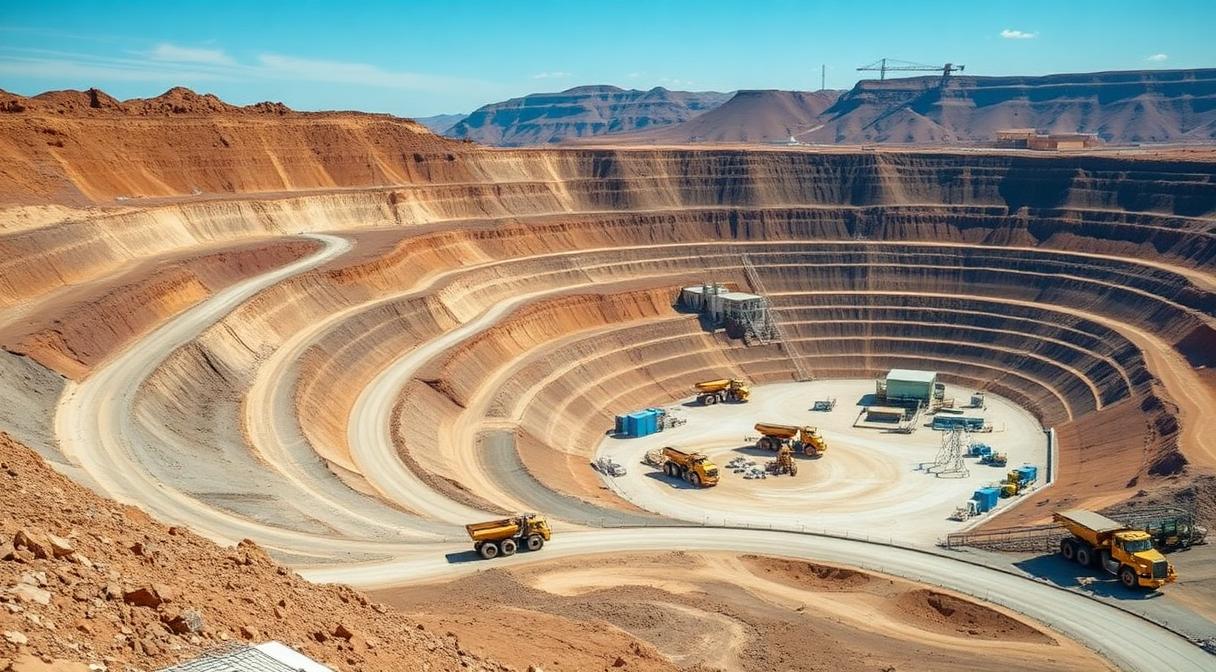
A mine's economics flex across exploration, development, production and closure. Image generated for editorial use.
The basics: grade and AISC
Two more terms unlock most mining discussion.
Grade is how concentrated the metal is in the rock — for gold, measured in grams per tonne (g/t). High grade means more metal per tonne dug and processed, which usually means lower cost. In mining, grade is king.
AISC — all-in sustaining cost — is the industry's best single measure of what it truly costs to produce an ounce, including mining, processing, and the spending needed to keep the operation running. If gold sells for $4,800 and a miner's AISC is $1,600, it earns a healthy margin per ounce. If AISC is $4,400, the same gold price leaves it barely profitable and dangerously exposed to any price dip. AISC, not the headline gold price, tells you whether a miner actually makes money.
Going deeper: why the economics are brutal
For experienced readers, a few realities define mining as a business.
It is capital-intensive and front-loaded. Enormous sums are spent for years before a single ounce is sold, which is why juniors and developers constantly raise money — and why they repeatedly issue new shares, diluting existing holders. Dilution is a structural feature of pre-production mining, not an occasional event.
Grade and cost are everything, and they decline. As the best ore is mined first, average grades across the industry have trended down over decades, pushing costs up. A rising metal price can mask this; a flat price exposes it.
Mine life is finite. Every producing mine is depleting its own reserves. A producer that isn't finding or buying new ounces is, in effect, slowly liquidating itself. This is why exploration success and acquisitions matter even for healthy producers — and it feeds directly into the merger waves discussed later in the series.
Jurisdiction shapes the whole calculation. The same deposit is worth far more in a stable, permitting-friendly country than in one with political risk, resource nationalism, or unreliable power. Geography is not a detail; it's a core variable.
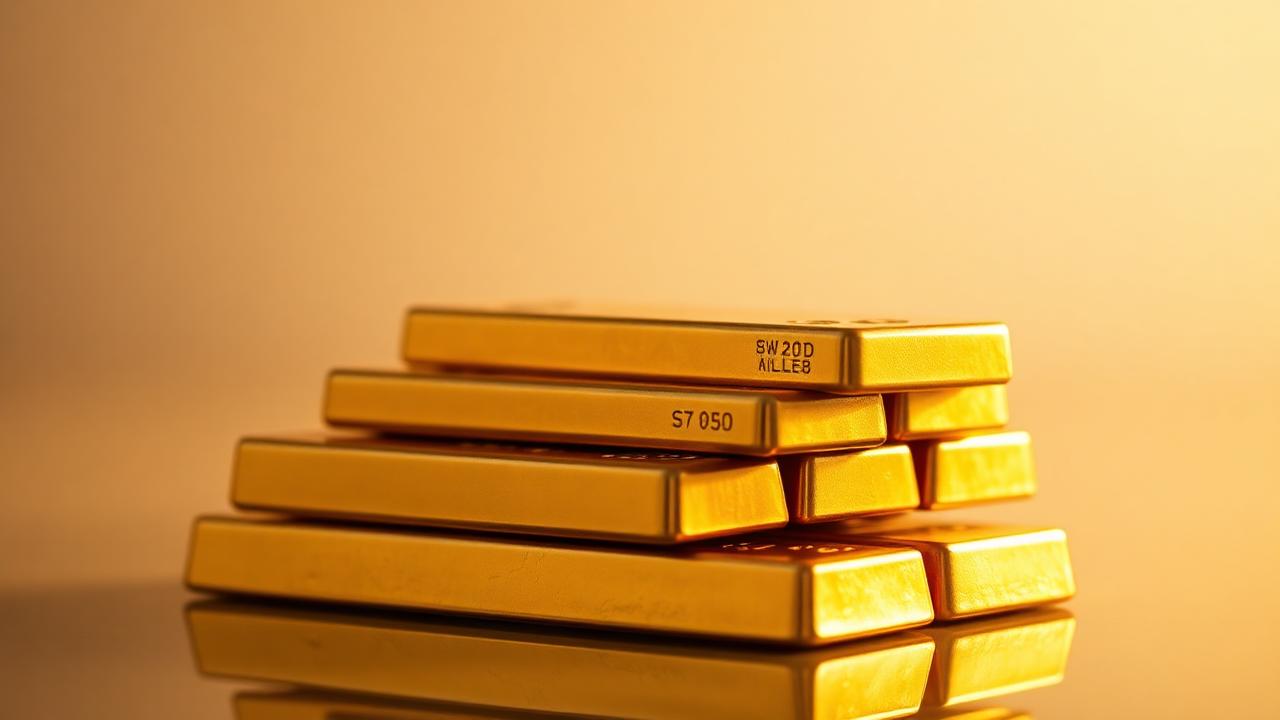
Physical bullion underpins precious-metals exposure for long-term investors. Image generated for editorial use.
The takeaway
A mine is the end of a long, expensive, failure-prone journey that usually takes a decade or more. "Resource" is metal that might be there; "reserve" is metal a company can profitably extract — only the latter pays the bills. Grade determines cost, and AISC determines whether a miner makes money at today's prices. Mining is a hard business, and its hardness explains much of how the sector is priced.
What people commonly get wrong
Confusing a resource with a reserve. A huge resource can contain a tiny economically minable reserve.
Ignoring grade and AISC. A high metal price doesn't help a miner whose costs are nearly as high.
Forgetting dilution. Pre-production miners fund themselves by issuing shares, which can quietly shrink your slice.
Underestimating timelines. "We made a discovery" can be 10–20 years and several capital raises away from "we sell metal."
Overlooking jurisdiction. Where the rock sits can matter as much as what's in it.
This article is educational and is not investment advice. Mining companies, especially exploration-stage juniors, are high-risk and can lose all their value. Verify technical claims against official company filings (such as NI 43-101 or JORC reports) and consider speaking with a regulated, independent financial adviser.
Sources for context: standard mining-industry definitions (CIM/JORC reserve and resource frameworks) and World Gold Council guidance on production costs and AISC.
Next in the series: Article 6 — How to Read a Mining Company: the checklist for telling a strong producer from a weak one.
Risk Warning: Trading and investing carries significant risk. Your investments can fall as well as rise. CFDs carry high risk of rapid loss due to leverage. Cryptocurrency is not ASIC-regulated and not covered by AFCA. This is information only, not financial advice. Seek independent advice before investing.
Written by
TradeRadarNews Team
Editorial Team
Our editorial team covers markets, fintech, and regulatory developments across Australia and globally.
Advertisement. Your capital is at risk when trading. Not financial advice.
Risk Warning: Trading and investing carries significant risk. Your investments can fall as well as rise. CFDs carry high risk of rapid loss due to leverage. Cryptocurrency is not ASIC-regulated and not covered by AFCA. This is information only, not financial advice. Seek independent advice before investing.