Gold, Explained: Why a Metal That Pays Nothing Holds Its Value
Gold produces nothing. It pays no interest, no dividend, no rent. A bar of it sitting in a vault next year is exactly as productive as it was this year: not at all. And yet through 2025 it staged one of the great...
Key Takeaways
1This article covers key developments in the crypto market
2Always verify claims with official ASIC and regulatory sources
3Past performance does not guarantee future results
4Consider speaking to a qualified financial adviser before acting
5TradeRadarNews provides information only — not financial advice
Gold produces nothing. It pays no interest, no dividend, no rent. A bar of it sitting in a vault next year is exactly as productive as it was this year: not at all. And yet through 2025 it staged one of the great runs in its history, and in late January 2026 it touched a record near $5,589 an ounce. So why does an asset that does nothing command that kind of price — and what actually moves it?
This article answers both questions. The first half explains, in plain terms, why gold holds value at all. The second half — Going Deeper — gets into the real mechanics of its price for readers who want more than "it's a safe haven."
The basics: why gold is worth anything
Three properties do most of the work.
It's scarce — there's only so much of it, and new supply from mining adds only a small fraction to the existing above-ground stock each year. It's durable — gold doesn't rust, tarnish, or degrade, so an ounce mined by the Romans is still an ounce today. And it has no counterparty — unlike a bond or a bank deposit, gold isn't someone else's promise to pay you. It can't default. Nobody has to stay solvent for your gold to remain gold.
Layered on top of those physical facts is something less tangible but just as important: a multi-thousand-year shared agreement that gold stores value. That history is self-reinforcing. People trust gold partly because other people have always trusted gold.
The honest part of the story is that gold's value rests heavily on that shared belief rather than on cash flows you can model. This is why some serious investors love it and others dismiss it. Both camps are reasoning correctly from different starting points.
The basics: what drives the price
A handful of forces move gold day to day and year to year.
Real interest rates. This is the big one. A "real" rate is the interest rate after subtracting inflation. Because gold pays no interest, it competes with assets that do — like government bonds. When real rates are high, holding gold means giving up attractive yields elsewhere, so gold tends to struggle. When real rates fall, that opportunity cost shrinks and gold tends to do well.
The US dollar. Gold is priced in dollars globally, so a weaker dollar usually means a higher gold price, and vice versa.
Central bank demand. The world's central banks buy gold as a reserve asset. According to the World Gold Council, they purchased about 863 tonnes in 2025 — down from the 1,000-plus tonne pace of recent years, but still far above the 2010–2021 average of roughly 473 tonnes. The Council forecasts broadly similar buying in 2026. This demand is unusual because it's largely insensitive to price: central banks buy as policy, not as a trade.
Fear and uncertainty. Gold often rises during crises because investors want something that can't go to zero. But — and this matters — that relationship is not reliable in the short term, as the deeper section explains.
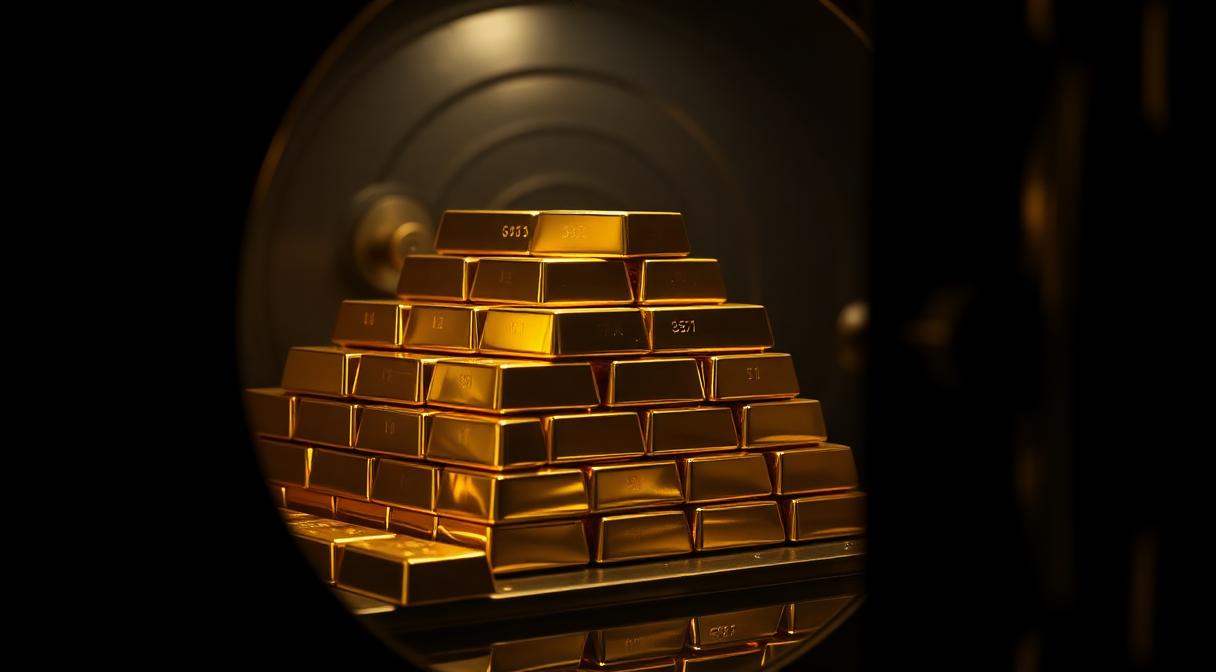
Gold's monetary role is what makes it different from any other commodity. Image generated for editorial use.
Going deeper: the price story behind 2025–2026
For experienced readers, the recent run rewards a closer look.
Gold's 2025 surge was broad-based. The LBMA average price for the full year was about $3,431 an ounce, up roughly 44%, and it crossed $4,000 for the first time in October 2025. The drivers stacked: falling-rate expectations, a softer dollar, record investment demand through ETFs and bars, and that steady central bank bid. Late in 2025, by value, gold overtook US Treasuries to become the world's largest reserve asset — a genuinely historic marker.
A structural theme underneath all this is de-dollarisation. After 2022, when a major economy's foreign reserves were frozen amid sanctions, reserve managers everywhere absorbed a lesson: assets held in someone else's financial system can be frozen; physical gold can't. BRICS-aligned nations have been steadily raising gold's share of their reserves. This is a slow, policy-driven, price-insensitive flow — which is why some analysts argue it creates a kind of demand floor beneath the market.
But 2026 also delivered a sharp reminder that gold is not a magic shield. When conflict erupted in the Persian Gulf, gold fell alongside equities and bonds rather than rising. Why? In an acute liquidity crunch, investors sell what they can sell to raise cash and meet obligations — and gold, being highly liquid, gets sold precisely because it's easy to sell. The safe-haven reputation is real over long horizons but unreliable over days and weeks. Anyone who expected gold to spike the moment trouble hit learned this the hard way.
The opportunity-cost lens explains the rest. Gold tends to thrive when the return on "safe" yielding alternatives is low or falling and to struggle when those yields are attractive. If you understand only one driver, make it the real interest rate.
The takeaway
Gold holds value because it's scarce, durable, and free of counterparty risk — anchored by thousands of years of shared belief. Its price is driven mostly by real interest rates and the dollar, supported structurally by central-bank and de-dollarisation demand, and only unreliably by crisis. It is a store of value, not a productive asset, and it behaves accordingly.
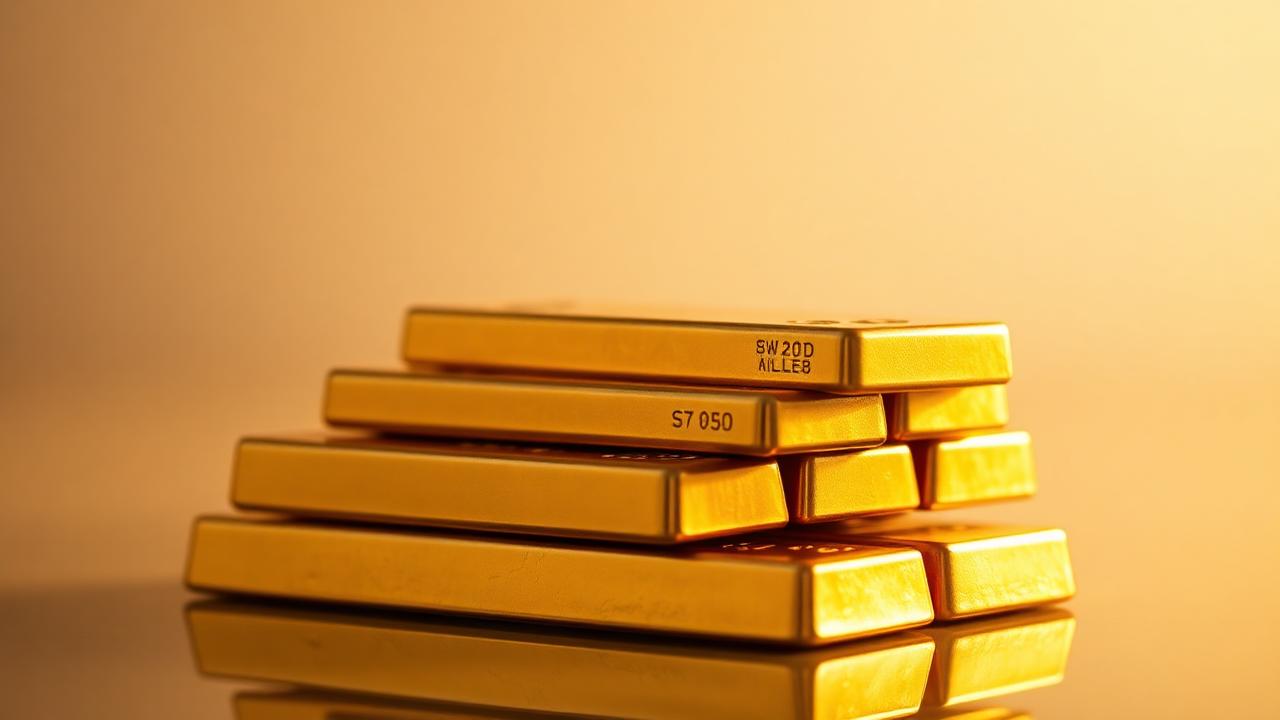
Physical bullion underpins precious-metals exposure for long-term investors. Image generated for editorial use.
What people commonly get wrong
Expecting gold to rise in every crisis. In liquidity crunches it can fall hard, as 2026 showed, because it's sold because it's liquid.
Calling it a short-term inflation hedge. Gold has tracked inflation reasonably over very long periods, but over months or a few years the link is loose at best.
Ignoring opportunity cost. A non-yielding asset is always competing with yielding ones; rising real rates are a genuine headwind.
Reading central-bank tonnage as a price prediction. It's a structural support, not a timing tool — and the figures vary by source, partly because some buyers (notably China) don't report consistently.
This article is educational and is not investment advice. Gold can and does fall in value, sometimes sharply. Verify all figures against primary sources such as the World Gold Council, and consider speaking with a regulated, independent financial adviser before making decisions.
Sources for figures cited: World Gold Council, Gold Demand Trends: Full Year 2025; J.P. Morgan Global Research; LBMA price data; mainstream financial press reporting on 2025–2026 prices and central-bank reserve trends.
Next in the series: Article 3 — Silver's Split Personality: the metal that is half money, half industrial raw material, and why that makes it the wild one.
Risk Warning: Trading and investing carries significant risk. Your investments can fall as well as rise. CFDs carry high risk of rapid loss due to leverage. Cryptocurrency is not ASIC-regulated and not covered by AFCA. This is information only, not financial advice. Seek independent advice before investing.
Written by
TradeRadarNews Team
Editorial Team
Our editorial team covers markets, fintech, and regulatory developments across Australia and globally.
Advertisement. Your capital is at risk when trading. Not financial advice.
Risk Warning: Trading and investing carries significant risk. Your investments can fall as well as rise. CFDs carry high risk of rapid loss due to leverage. Cryptocurrency is not ASIC-regulated and not covered by AFCA. This is information only, not financial advice. Seek independent advice before investing.