Article 6 of 9 — Foundations of the Energy & Defense Sectors
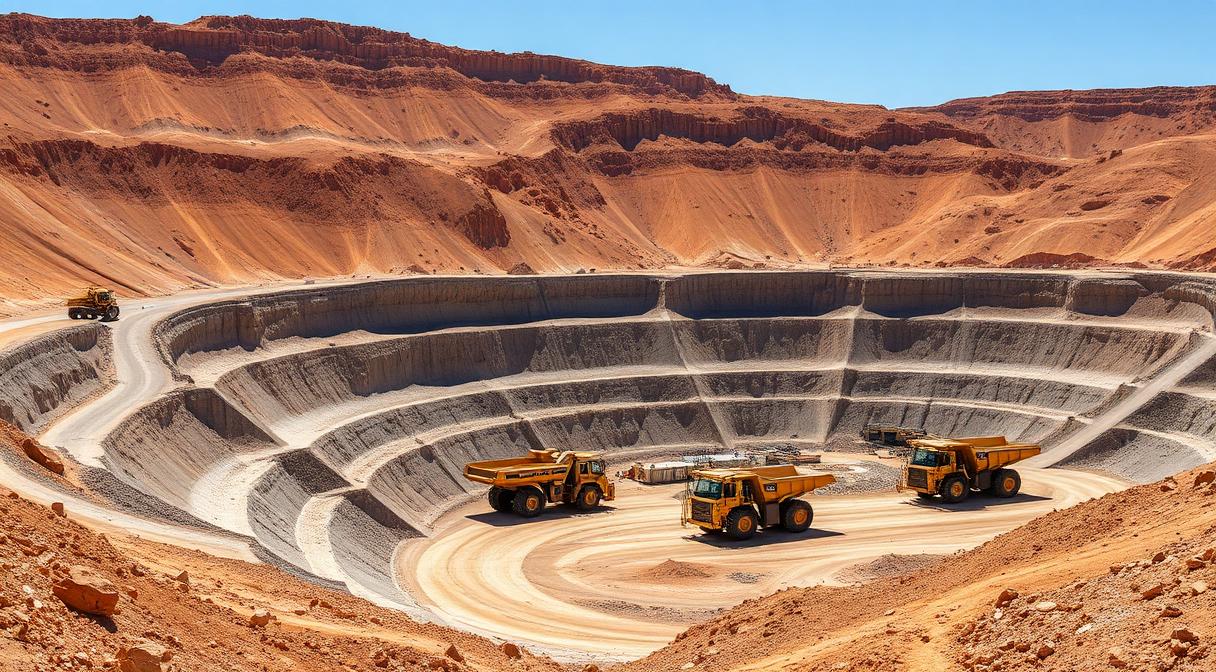
Some of the most strategically important materials in the world are ones most people have never heard of. The batteries in electric vehicles, the magnets in wind turbines, the electronics in a fighter jet, and the guidance systems in advanced weapons all depend on a cluster of metals and minerals that are mined and — more importantly — processed in just a handful of places. This is the hinge of the whole series: the single clearest point where the energy transition and national defense draw on exactly the same constrained resources. When those two huge sources of demand pull on the same chokepoint, supply chains stop being a logistics question and become a strategic one.
The basics explain what these minerals are and where the vulnerability lies; Going Deeper covers the crucial mining-versus-processing distinction and why new supply is so slow to arrive.
The basics: what "critical minerals" are
A critical mineral is one that's both economically essential and at risk of supply disruption — the "critical" refers to that combination of importance and vulnerability, not to rarity in the ground. The list varies by country but commonly includes:
- Copper — the workhorse of electrification; used in wiring, grids, motors, and almost everything electrical.
- Lithium, nickel, cobalt, graphite — core battery materials.
- Rare earth elements (REEs) — a group of seventeen metals (despite the name, not all are geologically scarce) that make uniquely powerful permanent magnets. Those magnets are everywhere: EV motors, wind turbines, and a wide range of defense systems.
The reason these specific materials matter is that there are often no easy substitutes. You can choose between energy sources; it's much harder to choose your way around the physics that makes a rare-earth magnet or a lithium battery work.
The basics: where the dependence lies
Here's the strategic problem. Production — and especially processing — of many critical minerals is highly concentrated in a small number of countries. For several key materials, including rare earths, one country dominates the refining and processing stage in particular. The International Energy Agency in 2026 flagged the market concentration of critical minerals and key energy technologies as a strategic vulnerability, and noted that a growing number of governments — dozens by 2026 — had adopted policies specifically to diversify and secure these supply chains.
Concentration like this creates leverage. A country that dominates supply of a critical input can, in principle, restrict exports as a geopolitical tool — which is exactly why import-dependent nations now treat mineral supply as a security issue rather than a purely commercial one.
The basics: why this bridges energy and defense
This is the article where the two halves of the series meet. The clean-energy build-out — batteries, turbines, grids, solar — and the modernization of militaries draw on heavily overlapping mineral supply chains. Rare-earth magnets go into both wind turbines and defense hardware. Copper is fundamental to both electrification and military electronics. So a disruption in a single supply chain can hit clean-energy plans and defense programs simultaneously, and the two sectors can find themselves competing for the same constrained materials. Energy security and defense security converge, quite literally, in a mine and a refinery.
Going deeper: mining isn't the chokepoint — processing is
For experienced readers, this is the distinction that reframes the whole issue.
Processing, not mining, is the real bottleneck. Critical minerals are often mined in a reasonably diverse set of countries. But turning that raw ore into refined, usable material — the chemistry-intensive processing and refining stage — is far more concentrated. A nation can have mines and still be dependent, because the refining happens elsewhere. This is why "we'll just open our own mine" is an incomplete answer: without processing capacity, the dependence remains. Building refining and processing capacity, not just digging holes, is the harder strategic task.
New supply is painfully slow. As covered in the metals context of mining generally, bringing a new mine and processing chain online can take a decade or more through exploration, permitting, financing, and construction. So even with strong political will and capital, diversifying a concentrated supply chain is a long game measured in years, not budget cycles. Demand from both energy and defense can rise far faster than new supply can respond.
Substitution and recycling help, but only partly. Engineers can sometimes redesign to use less of a constrained mineral, and recycling will eventually return material to the system — but recycling depends on having a large installed base to recycle, which takes time to accumulate, and substitution often comes with performance trade-offs. These are real mitigants, not quick fixes.
Export controls are now a strategic lever. Because processing is so concentrated, control over it has become an instrument of statecraft. Restrictions on the export of certain critical minerals or processing technology can be deployed in trade and geopolitical disputes — which is precisely why the concentration is treated as a vulnerability rather than a convenience.
The honest summary: critical minerals are where the abstract idea of "supply-chain resilience" becomes concrete and difficult. The dependence is real, the fix is slow, and it sits at the exact intersection of the energy transition and national security.
The takeaway
Critical minerals — copper, battery metals, and rare earths above all — are essential and vulnerable, which is what makes them "critical." Their supply, and especially their processing, is concentrated in few countries, creating strategic leverage and prompting a global scramble for diversification. Because clean energy and defense rely on the same materials, this is where the two sectors most clearly converge. New supply is slow, processing is the real chokepoint, and substitution and recycling help only at the margins and over time.
What people commonly get wrong
- Focusing on mining, not processing. The refining stage is where concentration — and the real dependence — sits.
- Assuming new mines fix it quickly. A decade-plus lead time means supply can't respond fast to surging demand.
- Confusing "rare earths" with rarity. Many aren't geologically scarce; the bottleneck is processing and concentration.
- Treating it as only an energy or only a defense issue. It's the point where both converge on the same materials.
- Overrating recycling as a near-term fix. It depends on an installed base that takes years to build up.
This article is educational and is not investment advice. Critical-mineral supply chains and the related geopolitics are fast-moving; verify specifics against primary sources such as the IEA, the USGS, and government critical-minerals strategies, and consider speaking with a regulated, independent financial adviser.
Sources for context: International Energy Agency State of Energy Policy 2026; Wood Mackenzie 2026 themes; PwC 2026 mining and metals outlook; USGS critical-minerals materials. Figures reflect 2026 reporting and should be refreshed at publish time.
Next in the series: Article 7 — The Defense Sector Explained: how the industry is actually structured, how budgets flow, and what the 2026 spending surge means.