Renewables, the Grid & Storage: The Hard Part Isn't the Sunshine
Generating clean power is the easy part. Learn why the grid and energy storage are the real bottlenecks of the renewable transition, and what 2026 policy means.
Key Takeaways
1This article covers key developments in the crypto market
2Always verify claims with official FCA and regulatory sources
3Past performance does not guarantee future results
4Consider speaking to a qualified financial adviser before acting
5TradeRadarNews provides information only — not financial advice
Article 5 of 9 — Foundations of the Energy & Defense Sectors
The cost of generating clean electricity has fallen dramatically — solar and wind are now among the cheapest ways to produce a unit of power in many places. So why isn't the transition simply finished? Because generating clean power turns out to be the easy part. The hard part is delivering it reliably, at the right time, to where it's needed — which means the real bottlenecks are the grid and storage, not the panels and turbines. This article is about that less glamorous, more decisive half of the story.
The basics cover the sources and the bottleneck plainly; Going Deeper gets into balancing, storage duration, and the policy cross-currents shaping 2026.
The basics: the renewable sources
Solar uses photovoltaic (PV) panels to turn sunlight directly into electricity. Cheap, modular, and fast to deploy — but it only works in daylight and is weaker in cloud and winter.
Wind uses turbines, onshore (cheaper) or offshore (more expensive but stronger, steadier wind). Output rises and falls with the weather.
Hydro generates power from flowing or falling water. It's the largest established renewable, valuable because it's often dispatchable — operators can release water on demand — but it's limited by geography and drought.
Geothermal taps underground heat for steady output, but only where the geology cooperates.
The common thread for solar and wind — the two driving the transition's growth — is intermittency: the energy is clean and increasingly cheap, but it arrives on nature's schedule, not on demand.
The basics: why the grid is the bottleneck
A power grid is the network of wires, substations, and controls that moves electricity from where it's made to where it's used and keeps supply and demand balanced instant by instant. Electricity is unusual: at the grid level it can't easily be stockpiled, so generation and consumption must match continuously or the system destabilises.
This makes the grid the choke point of the transition for several reasons:
Location. The best sun and wind are often far from cities, requiring new long-distance transmission lines that take years to permit and build.
Interconnection queues. In many markets, a backlog of renewable projects waits years just for permission to plug in.
Balancing. A grid leaning heavily on intermittent sources needs ways to cope when they suddenly fade — without that, reliability suffers.
You can build all the solar farms you like, but if the grid can't carry the power or balance the swings, the clean electricity doesn't reach anyone. Grid investment, not generation, is increasingly the binding constraint.
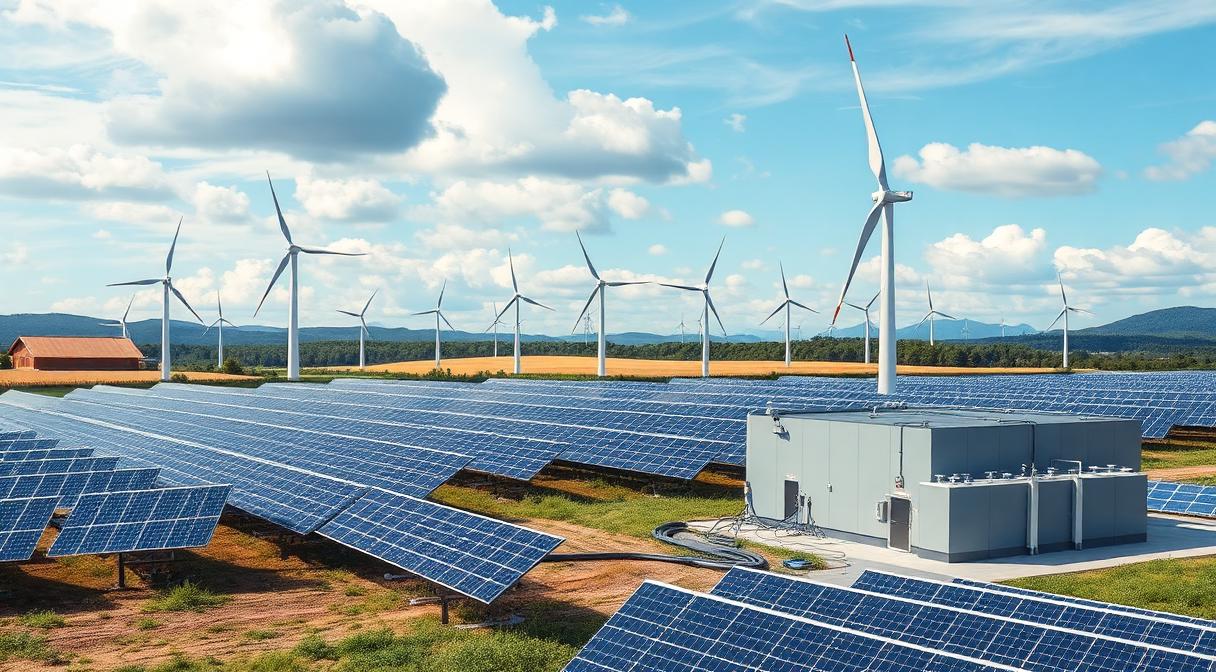
The grid and storage build-out is now as investable as generation itself. Image generated for editorial use.
The basics: storage
Storage is how you break the tyranny of intermittency — saving energy when it's abundant and releasing it when it's scarce.
Batteries (mostly lithium-based today) are fast, increasingly cheap, and excellent at short-duration jobs — smoothing minutes-to-hours swings and shifting solar from midday into the evening. Pumped hydro — pumping water uphill when power is cheap, releasing it through turbines when needed — is the dominant form of large-scale, longer-duration storage, again limited by geography.
The catch, explored below, is duration: storing power for a few hours is now routine; storing it for many days or across seasons is not.
The basics: 2026 policy cross-currents
Renewables are unusually exposed to policy, and 2026 pulled in two directions. On one side, surging electricity demand — especially from data centres — and energy-security goals support clean build-out. On the other, the policy environment tightened in places: in the United States, legislation began phasing out key clean-energy tax credits, and trade measures added cost, including steep tariffs on imported solar and restrictions targeting foreign-controlled supply chains. The lesson is the one from Article 1: in energy, government policy is a primary variable, and it can shift quickly.
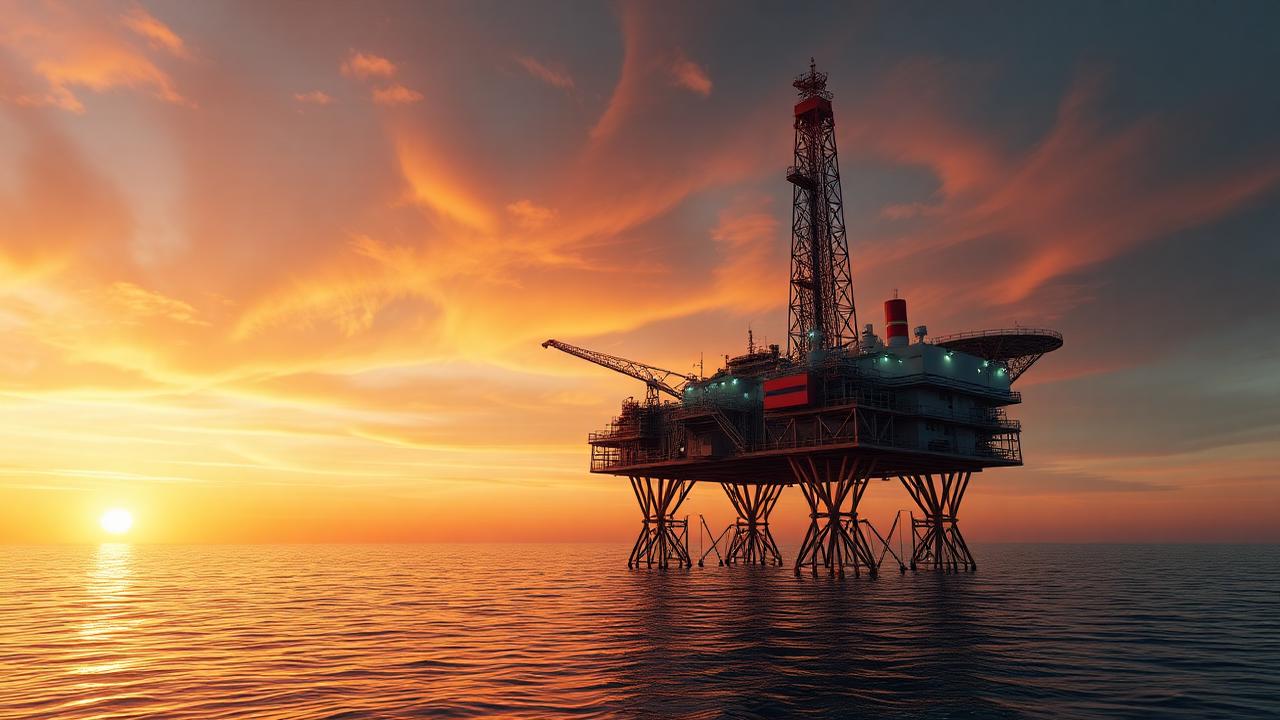
Offshore production remains central to global energy supply and listed energy equities. Image generated for editorial use.
Going deeper: balancing, duration, and curtailment
For experienced readers, three concepts explain why a high-renewables grid is hard.
The balancing problem. As solar floods the grid midday and vanishes at dusk, net demand on other sources can swing sharply (the famous "duck curve"). The grid needs flexible, dispatchable capacity — gas, hydro, batteries, demand response — to ride those swings. The more intermittent generation you add, the more flexibility you need alongside it. Renewables and grid flexibility are complements, not substitutes.
Storage duration is the real frontier. Today's batteries handle hours economically. But covering a still, cloudy week — or balancing summer-to-winter — needs long-duration storage that is still expensive or immature. Until that's solved cheaply, deep decarbonisation leans on firm, dispatchable backup (gas today, potentially nuclear, hydro, or future technologies). This is the technical crux of the whole transition.
Curtailment. When renewables produce more than the grid can use or carry, operators sometimes have to switch them off — wasting free energy. High curtailment is a signal that generation has outrun grid and storage capacity, underscoring again where the bottleneck really sits.
A fair summary: the renewable-generation problem is largely being solved on cost; the systems problem — grids, balancing, and long-duration storage — is where the difficulty, the spending, and the genuine uncertainty now concentrate.
The takeaway
Cheap clean generation isn't enough; the transition's hard problems are delivering and balancing that power. Solar and wind are intermittent, so the grid (which must match supply and demand instantly) and storage (which shifts energy across time) become the binding constraints. Short-duration battery storage is increasingly solved; long-duration storage is not, which is why firm, dispatchable backup still matters. And renewables are acutely policy-sensitive — tailwinds and headwinds can arrive fast.
Defence and aerospace contractors are a core leg of the new industrial-policy trade. Image generated for editorial use.
What people commonly get wrong
Thinking generation is the whole problem. The grid and storage are the harder, more decisive constraints.
Ignoring the grid. Transmission and interconnection delays can strand even cheap clean power.
Assuming storage is solved. Hours, yes; days and seasons, not yet affordably.
Treating renewables and dispatchable power as either/or. High-renewable grids need flexible backup, not less of it.
Underestimating policy swings. Tax credits, tariffs, and mandates move fast and reshape project economics.
This article is educational and is not investment advice. The pace and design of the energy transition are contested; this series presents competing views fairly. Verify figures against primary sources such as the IEA, BloombergNEF, and national grid operators, and consider speaking with a regulated, independent financial adviser.
Sources for context: Deloitte 2026 Renewable Energy Industry Outlook; Wood Mackenzie; BloombergNEF New Energy Outlook 2026; International Energy Agency. Figures reflect 2026 reporting and should be refreshed at publish time.
Next in the series: Article 6 — Critical Minerals: The Shared Chokepoint: the unglamorous materials that both clean energy and defense depend on, and why supply is a strategic worry.
Risk Warning: Trading and investing carries significant risk. Your investments can fall as well as rise. CFDs carry high risk of rapid loss due to leverage. Cryptocurrency is not FCA-regulated and not covered by FSCS. This is information only, not financial advice. Seek independent advice before investing.
Written by
TradeRadarNews Team
Editorial Team
Our editorial team covers markets, fintech, and regulatory developments across the UK and globally.
Advertisement. Your capital is at risk when trading. Not financial advice.
Risk Warning: Trading and investing carries significant risk. Your investments can fall as well as rise. CFDs carry high risk of rapid loss due to leverage. Cryptocurrency is not FCA-regulated and not covered by FSCS. This is information only, not financial advice. Seek independent advice before investing.