Oil & Gas in 2026: The Backbone That Won't Sit Still
How the oil and gas industry works: upstream, midstream, and downstream, why gas became the backstop fuel, and what drives the price in 2026.
Key Takeaways
1This article covers key developments in the crypto market
2Always verify claims with official FCA and regulatory sources
3Past performance does not guarantee future results
4Consider speaking to a qualified financial adviser before acting
5TradeRadarNews provides information only — not financial advice
Article 3 of 9 — Foundations of the Energy & Defense Sectors
For a decade, oil and gas have been written off in headlines as yesterday's energy. Yet in 2026 they still supply the majority of the world's primary energy, natural gas has been re-embraced as the fuel that keeps the lights on while renewables scale, and oil prices still move markets and governments whenever conflict flares. Understanding how this industry is built — and why it remains the backbone even as the transition advances — is essential to understanding both energy and the geopolitics that link energy to defense.
This article walks through the structure of the industry, the price drivers, and the role gas now plays. Read straight through for the basics; Going Deeper covers the deeper tensions, including the "bridge fuel" debate.
The basics: how the industry is built
The oil and gas business splits into three stages, and the jargon is worth knowing because companies are often described by which stage they occupy.
Upstream — finding and producing oil and gas. Exploration, drilling, and extraction. This is the highest-risk, highest-reward end, most exposed to the commodity price.
Midstream — moving and storing it. Pipelines, tankers, storage terminals, and the facilities that liquefy natural gas into LNG (liquefied natural gas) so it can be shipped across oceans. Midstream often behaves more like a toll road — earning fees on volume — than a bet on price.
Downstream — refining crude oil into usable products (petrol, diesel, jet fuel) and distributing them, plus petrochemicals. Refining margins depend on the spread between crude costs and product prices.
A company can sit in one stage or span all three (an "integrated major"). Knowing which stage you're looking at tells you most of what you need to know about its risks.
The basics: oil vs. gas
They're often lumped together but behave differently. Oil is primarily a transport fuel and trades as a genuinely global commodity — a barrel is priced against world benchmarks. Natural gas is harder to move (it's a gas, not a liquid), so it has historically been more regional — until LNG made it shippable, gradually knitting regional gas markets into a more global one. That LNG build-out is one of the defining energy stories of the 2020s.
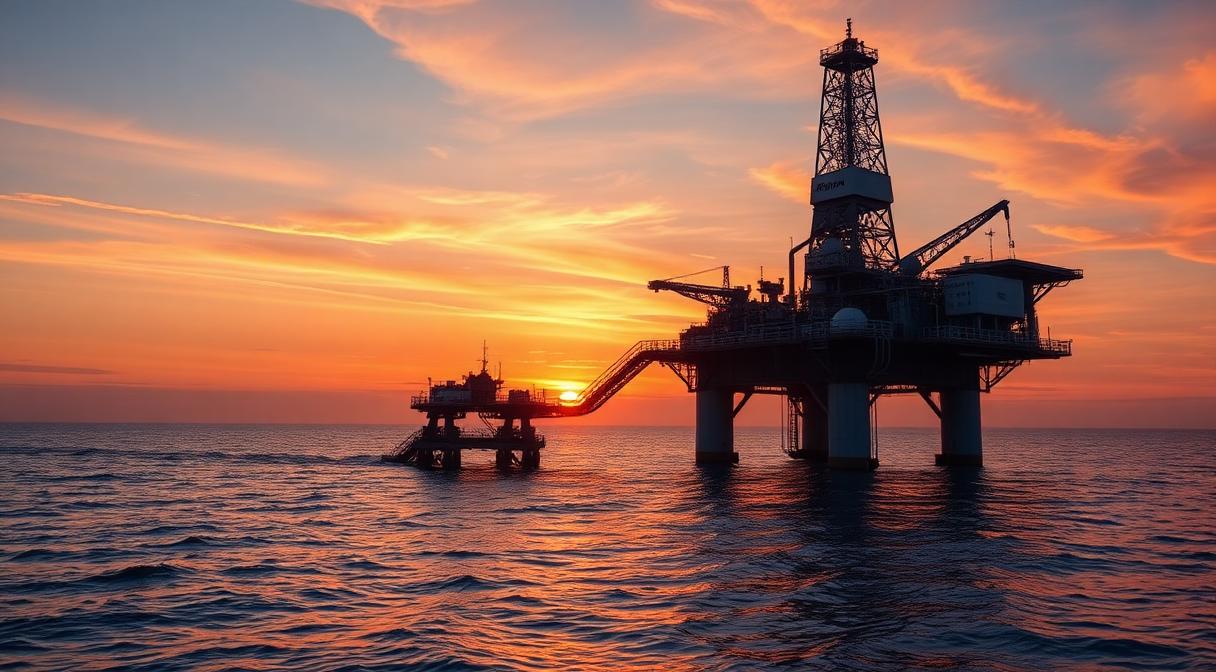
Listed oil majors remain the backbone of energy income portfolios. Image generated for editorial use.
The basics: why gas became the "backstop fuel"
A striking 2026 theme is gas's rehabilitation. As renewables grew, grids needed something flexible and reliable to fill the gaps when the sun set and the wind dropped. Gas-fired plants can ramp up and down quickly, emit roughly half the carbon of coal, and are comparatively cheap to build. Industry analysts in 2026 described natural gas and LNG as firmly re-established as a transition and backstop fuel, with dealmaking and investment flowing toward gas infrastructure. Surging electricity demand — notably from data centres — reinforced the case for dependable, dispatchable power.
The basics: what moves the price
Oil and gas prices swing on a few forces:
Supply — decisions by major producers (including the OPEC+ group) and the output of US shale, plus disruptions from outages or conflict.
Demand — tied to economic growth, industrial activity, travel, and weather.
Inventories — how much is in storage acts as a buffer or a warning.
Geopolitics — conflict near production regions or shipping chokepoints can spike prices on fear alone. The Persian Gulf and the Strait of Hormuz — through which a large share of seaborne oil passes — are perennial flashpoints, and 2026's Gulf tensions rippled straight into prices.
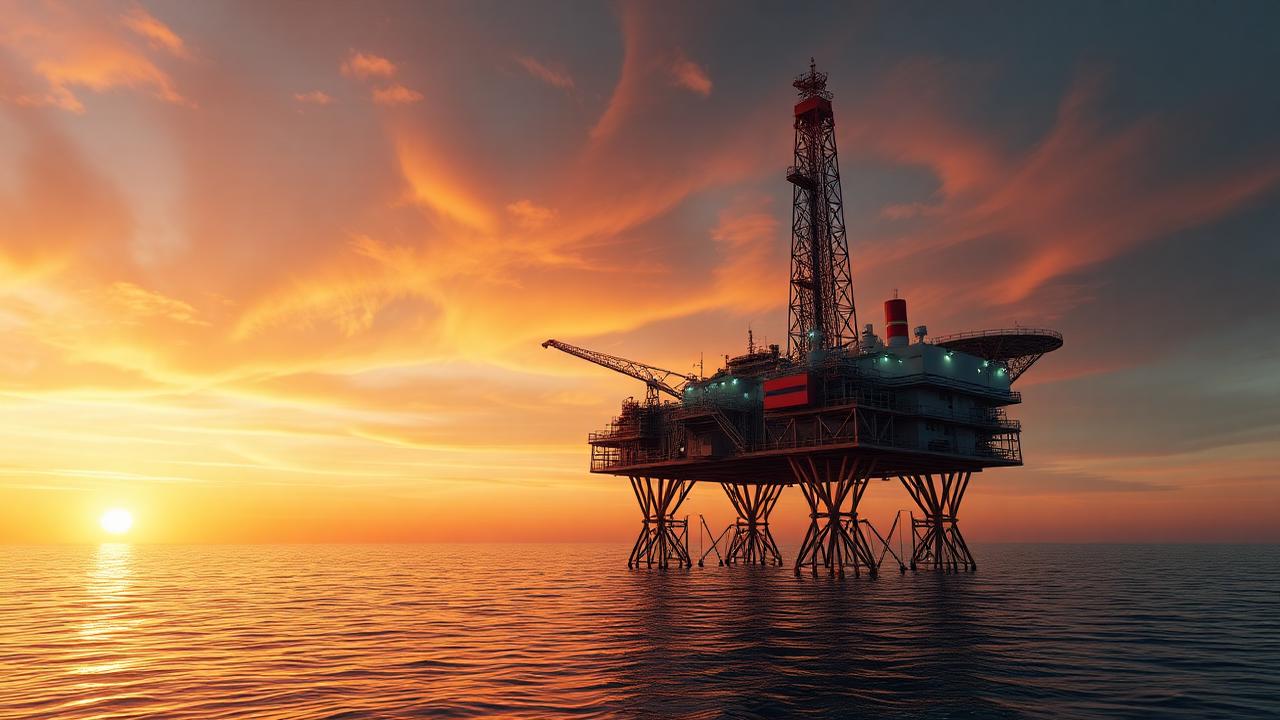
Offshore production remains central to global energy supply and listed energy equities. Image generated for editorial use.
Going deeper: the tensions beneath the surface
For experienced readers, oil and gas in 2026 sit on three fault lines.
The transition paradox. As capital shifts toward clean energy, investment in new oil and gas supply can fall faster than demand does. If demand proves stickier than the supply pipeline assumes — which it often has — the result is tighter markets and price spikes. Underinvestment is a genuine, if counterintuitive, risk: a world still using a lot of oil with too little new supply is a volatile world. This is why even transition-focused analysts watch upstream spending closely.
The "bridge fuel" debate — presented fairly. Gas's backstop role is contested. The case for: it displaces dirtier coal, backs up renewables, and supports reliability and affordability during a multi-decade transition. The case against: it's still a fossil fuel that emits carbon, methane leakage across the supply chain can erode its climate advantage, and heavy investment in long-lived gas infrastructure risks "locking in" emissions or stranding assets if policy tightens. Both arguments are serious; reasonable people weigh the reliability-versus-emissions trade-off differently, and this series doesn't adjudicate it.
Geopolitical leverage. Because oil and gas are unevenly distributed, producing nations wield real power, and importing nations treat supply as a security issue — the thread that ties this article back to the energy-as-national-security frame of Article 1. Spare production capacity (the cushion a few producers can bring online quickly) is one of the most watched and least visible numbers in the entire market.
The takeaway
Oil and gas remain the backbone of global energy in 2026, split into upstream (production, price-exposed), midstream (transport and LNG, fee-based), and downstream (refining, margin-based). Oil is a global transport commodity; gas, made shippable by LNG, has been re-embraced as a flexible backstop for renewables. Prices move on supply, demand, inventories, and above all geopolitics. The big tensions — underinvestment risk, the contested "bridge fuel" role, and supply as geopolitical leverage — are where the real debates live.
Defence and aerospace contractors are a core leg of the new industrial-policy trade. Image generated for editorial use.
What people commonly get wrong
Assuming oil and gas are irrelevant because of the transition. They still supply most of the world's energy and move geopolitics.
Ignoring midstream. Pipelines and LNG behave like toll roads, not price bets — a different risk entirely.
Treating gas as purely villain or purely savior. The bridge-fuel question is a genuine trade-off, not a settled fact.
Forgetting underinvestment risk. Falling supply investment can tighten markets even as demand slowly declines.
Overlooking chokepoints. A large share of oil moves through a few narrow shipping lanes; trouble there moves prices fast.
This article is educational and is not investment advice. The role of oil and gas in the energy transition is contested; this series presents competing views fairly rather than resolving them. Verify figures against primary sources such as the IEA, EIA, and OPEC, and consider speaking with a regulated, independent financial adviser.
Sources for context: PwC Global M&A trends in energy 2026; International Energy Agency; U.S. EIA; financial-press reporting on 2026 oil markets and Gulf geopolitics. Figures reflect 2026 reporting and should be refreshed at publish time.
Next in the series: Article 4 — The Nuclear Resurgence: why a technology written off a decade ago is back, and the debates that come with it.
Risk Warning: Trading and investing carries significant risk. Your investments can fall as well as rise. CFDs carry high risk of rapid loss due to leverage. Cryptocurrency is not FCA-regulated and not covered by FSCS. This is information only, not financial advice. Seek independent advice before investing.
Written by
TradeRadarNews Team
Editorial Team
Our editorial team covers markets, fintech, and regulatory developments across the UK and globally.
Advertisement. Your capital is at risk when trading. Not financial advice.
Risk Warning: Trading and investing carries significant risk. Your investments can fall as well as rise. CFDs carry high risk of rapid loss due to leverage. Cryptocurrency is not FCA-regulated and not covered by FSCS. This is information only, not financial advice. Seek independent advice before investing.