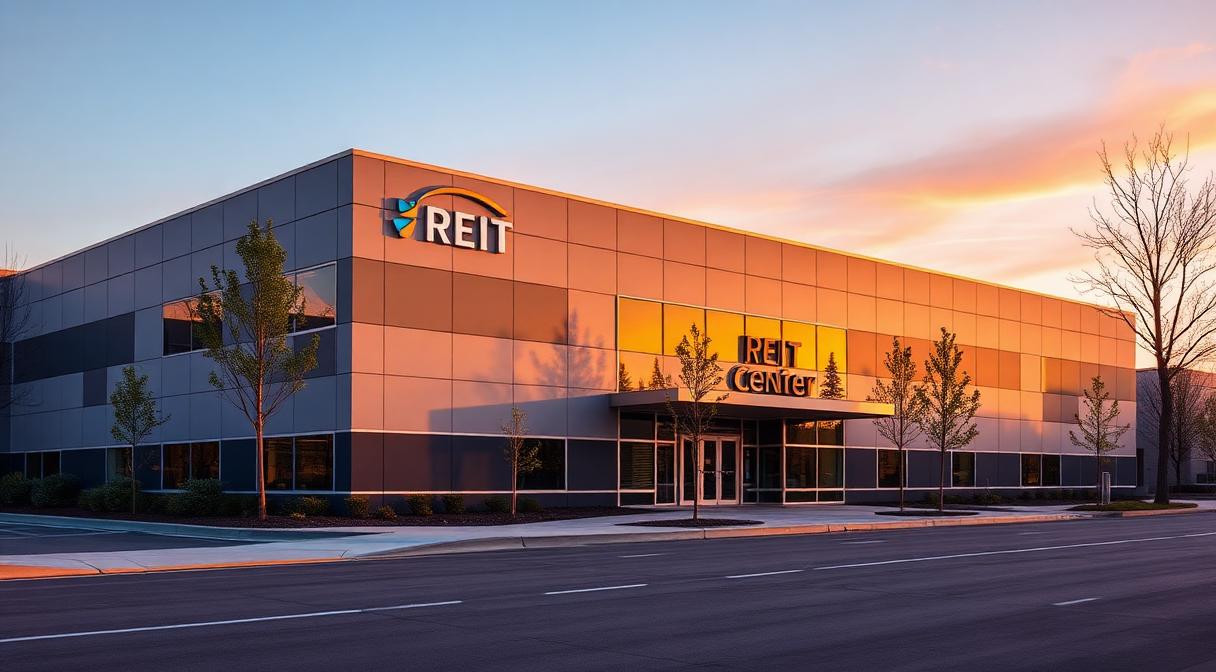
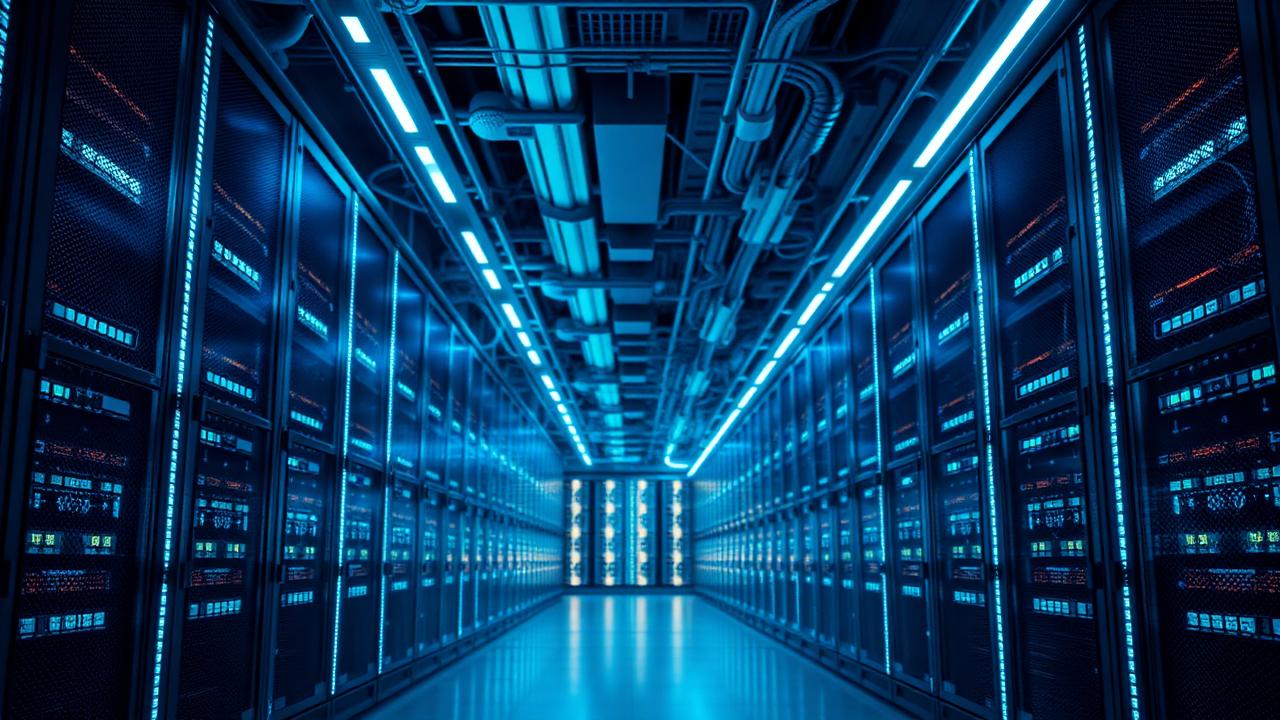
Every gigawatt of AI compute sits in a physical building that someone owns and leases out. Meet the data center REIT stocks — Equinix and Digital Realty — renting capacity to the AI boom.
Chips, memory, and networking all have to live somewhere — in a purpose-built facility with the power, cooling, and connectivity to run them around the clock. Some hyperscalers build their own; many lease, and the largest landlords are real estate investment trusts that own data centers the way other REITs own malls or apartments. They are the recurring-revenue layer beneath the hardware: while the chipmakers capture the biggest slice of each dollar spent, the REITs collect rent on the buildings for a decade or more.
Where this sits in the stack. The buildings sit beneath the equipment that fills them — the power and cooling systems — and depend entirely on access to the power grid, which is now the real constraint on where and how fast they can be built. See the full AI infrastructure stack.
How a data center REIT works
There are two broad models. Retail colocation rents smaller footprints and, crucially, connections between tenants. Wholesale leases large, power-heavy halls to a single hyperscaler. Both are measured not by earnings per share but by funds from operations (FFO), the standard REIT cash-flow metric. The appeal is stability: tenants sign 10-to-15-year leases at fixed prices to lock in capacity that is, for now, supply-constrained. The gating factor is no longer land or demand — it is power availability, which ties this layer directly to the grid.
Equinix: the interconnection leader
What it does. Equinix (EQIX) is the colocation and interconnection leader, operating more than 270 data centers across 77 markets.
The numbers. First-quarter 2026 revenue was about $2.44 billion, up roughly 10%, with around 60% of its largest deals AI-related and record quarterly bookings, per its results. It raised full-year guidance and is investing $4–5 billion a year through 2029 to roughly double its capacity.
The edge. Interconnection density — hundreds of thousands of direct connections between customers — is extremely hard for a rival to replicate, and it is what keeps tenants in place.
The risk. As a REIT, Equinix is sensitive to interest rates, and a wave of new industry capacity could pressure pricing.
Digital Realty: hyperscale scale
What it does. Digital Realty (DLR) is the large-footprint wholesale leader, leasing power-heavy facilities to the biggest cloud providers.
The numbers. First-quarter 2026 revenue was about $1.6 billion, up 16%, and the company signed the largest hyperscale lease in its history; it guided 2026 core FFO per share to roughly $7.90–8.00 on revenue near $6.6 billion.
The edge. Scale and the ability to deliver large, build-to-suit capacity where hyperscalers need it.
The risk. Heavier tenant concentration than Equinix, high capital intensity, and the standing threat that hyperscalers build rather than lease.
The oversupply question
The bull case is straightforward: leases are long and contracted, capacity is genuinely scarce, and data-center power demand is forecast to grow at a 15–20% annual rate for years. The bear case is that the same conditions invite overbuilding, that REITs carry real interest-rate sensitivity, and that the largest tenants could shift toward self-building. As income-oriented holdings, these names are valued differently from the growth stocks lower in the stack — worth keeping in mind when comparing across the series. Both sides hold.
What this layer feeds
The buildings house everything the stack produces. They are kept running by the power and cooling hardware inside them and fed by the grid. For the full map, start with the series overview.
This article is for information only and is not investment advice or a recommendation to buy or sell any security. TradeRadarNews is not a licensed financial adviser. Figures are accurate as of June 2026 and will change. Do your own research.