Four S&P 500 cloud giants are spending ~$700 billion on AI in 2026. Inside hyperscaler capex 2026 — who's buying, what they're building, and whether it pays back.
Key Takeaways
1This article covers key developments in the crypto market
2Always verify claims with official ASIC and regulatory sources
3Past performance does not guarantee future results
4Consider speaking to a qualified financial adviser before acting
5TradeRadarNews provides information only — not financial advice
Four S&P 500 cloud giants are spending roughly $700 billion in 2026 to build artificial intelligence. Here is who is buying, what they are building, and the open question of whether the spending pays back.
Everything lower in this stack — the chips, the memory, the networking — is sold-out and supply-constrained for one reason: a small group of companies is buying it at a scale with no precedent. Combined hyperscaler capital spending in 2026 sits in roughly a $680–720 billion range, an order of magnitude above where the industry was just a few years ago. These are the companies funding the build-out, renting the compute back out, and increasingly designing their own chips to do it more cheaply. They are the demand engine of the entire stack.
Where this sits in the stack. The clouds sit near the top of the AI infrastructure stack: they buy the chips and the networking below them, and their build-out runs up against the hard ceiling of the power grid. Their capital budgets are the dollars that flow down through every other layer.
What a hyperscaler is, and why capex is the story
A hyperscaler operates data centers at vast scale and rents computing to others (or, in Meta's case, consumes it internally). For years the metric that mattered was cloud revenue. Now it is capital expenditure — the spending watched as closely as sales, because it reveals how much capacity is being built ahead of demand. Two terms recur. Backlog, or remaining performance obligations (RPO), is contracted future revenue — the strongest forward signal a cloud business has. And custom silicon is each cloud's effort to design its own accelerators and depend less on Nvidia. The tension running through every name here is the same: the spending is certain and immediate, while the returns are deferred.
Microsoft: the enterprise anchor
What it does. Microsoft (MSFT) runs Azure, the cloud most embedded in enterprises.
The numbers. In its fiscal third quarter of 2026 (ended March 31, 2026), Microsoft reported revenue of about $82.9 billion, with Microsoft Cloud at $54.5 billion and Azure growing 40% in constant currency, per its results. Commercial backlog reached $625 billion, up 110%. Calendar-2026 capital spending is on track for roughly $190 billion — of which about $25 billion reflects higher component prices rather than added capacity, a direct read-through to the memory super-cycle in The Memory.
The edge. Sustained Azure growth, the OpenAI relationship, and its own Maia accelerator.
The risk. Concentration: roughly 45% of that backlog is tied to OpenAI commitments.
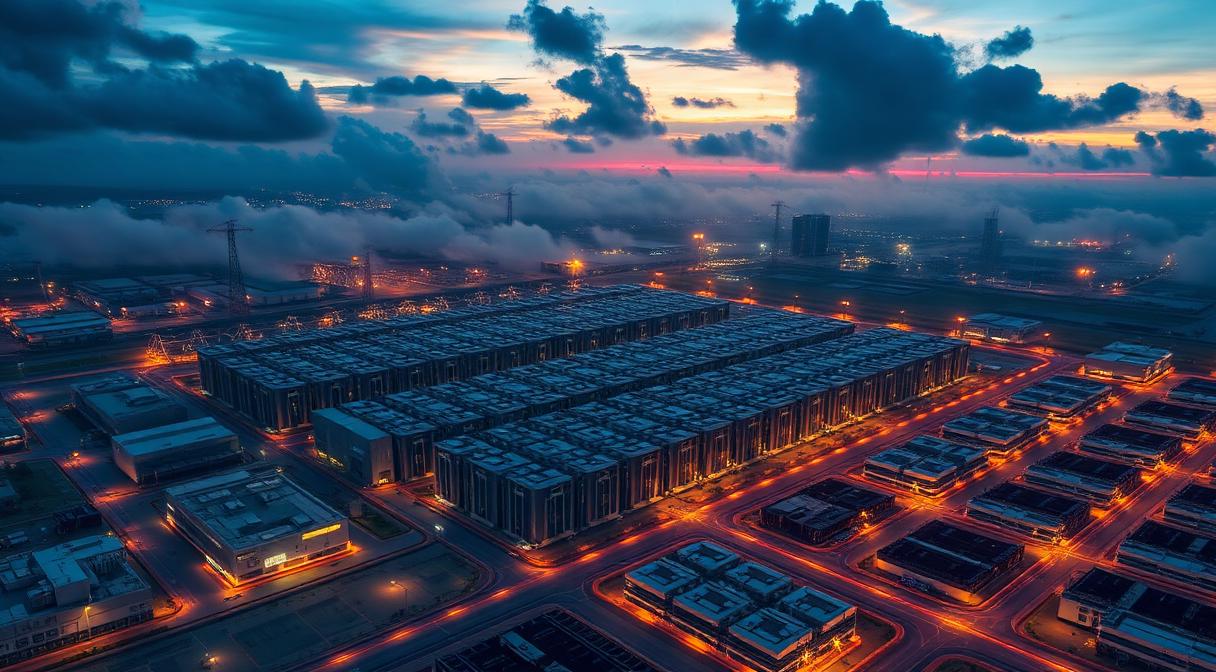
Hyperscaler capex is the single largest line item driving the AI cycle. Image generated for editorial use.
Amazon: scale and custom silicon
What it does. Amazon (AMZN) runs AWS, the largest cloud, and has gone furthest on custom chips.
The numbers. AWS growth reaccelerated to around 28%, and Amazon plans roughly $200 billion of capital expenditure in 2026 — a figure that, with a soft profit outlook, sent the stock down more than 10% after the print. Its custom-chip business (Trainium and Graviton) runs above a $20 billion annualized rate, with more than $225 billion in Trainium commitments disclosed.
The edge. Trainium economics and Project Rainier — the largest non-Nvidia AI cluster in production, built with Anthropic and ramping toward 2.2 gigawatts.
The risk. Free cash flow turns negative near-term as the capex lands ahead of the revenue.
Alphabet: the pace setter
What it does. Alphabet (GOOGL) runs Google Cloud and designs its own TPU accelerators.
The numbers. First-quarter 2026 revenue was about $109.9 billion, up 22%, with Google Cloud up 63% — faster than Azure or AWS — and a backlog that more than doubled in a single quarter to roughly $462 billion, per its results. Capital spending guidance for 2026 is $180–190 billion, with 2027 expected to rise significantly.
The edge. Deep TPU vertical integration — Alphabet designs its own accelerators and now sells them to select customers.
The risk. The same backlog implies steep capex and multi-year free-cash-flow compression; a pending antitrust ruling on its ad business is a separate overhang.
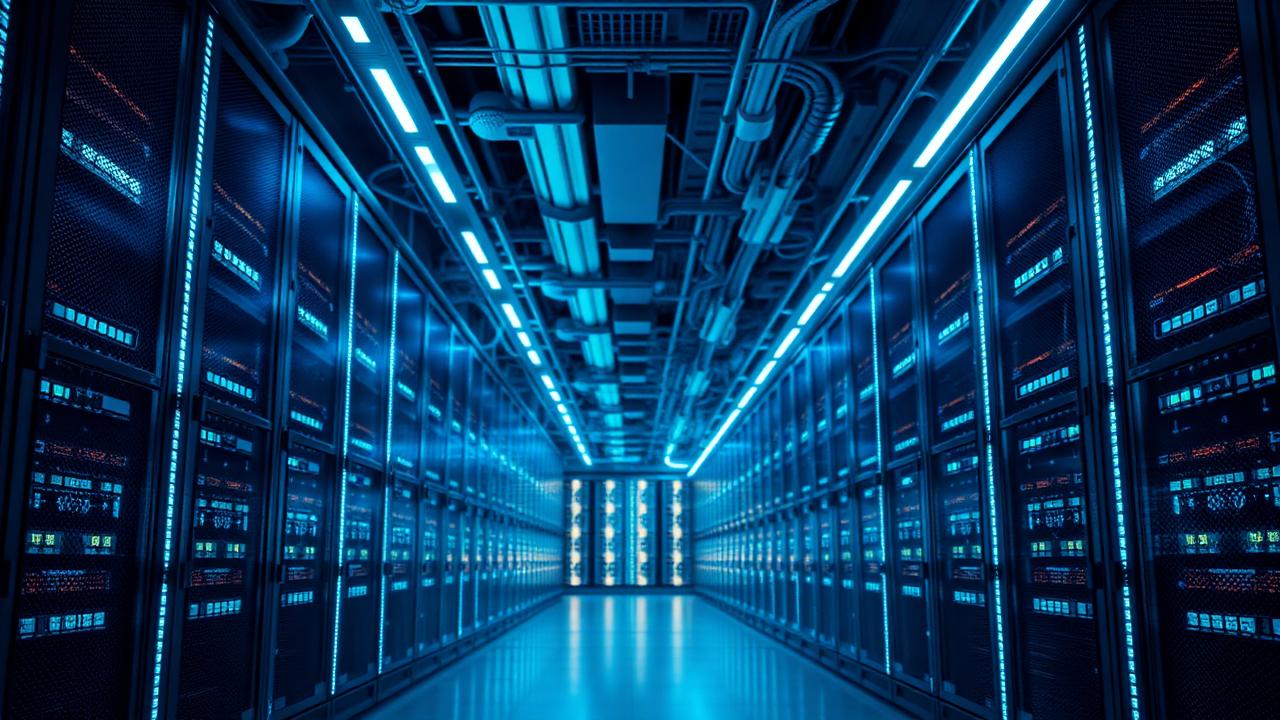
AI data centres now anchor a multi-trillion dollar infrastructure build-out. Image generated for editorial use.
Oracle: the late surge
What it does. Oracle (ORCL) has reinvented itself from a database vendor into an AI-infrastructure landlord.
The numbers. In its fiscal third quarter of 2026 (ended February 2026), revenue rose 22% to about $17.2 billion, with cloud up 44% and its OCI infrastructure unit up 84%; remaining performance obligations reached $553 billion, up 325%, per its release.
The edge. Chip-neutral (it runs Nvidia, AMD, and Broadcom silicon) and a customer-funded model in which much of the equipment is paid for upfront by tenants.
The risk. Heavy concentration: an estimated 54% of that backlog is a single customer, OpenAI, which has reportedly fallen short of internal revenue targets.
Meta: the giant buyer
Meta (META) is the useful contrast — it spends at hyperscaler scale but rents nothing out, consuming all of it internally for ranking, recommendations, and its own models. It has committed to deploy up to six gigawatts of AMD accelerators and is building its own MTIA custom chip. Its risk is the purest version of the whole layer's question: vast spending with no external cloud revenue to offset it.
Does the capex pay back?
This is the debate that hangs over every name here. The bull case: the backlogs are contracted commitments, not speculation, and custom silicon is bending the cost curve down over time. The bear case: free cash flow is compressing across all four, a single customer (OpenAI) anchors an uncomfortable share of two of the biggest backlogs, large lease commitments sit off the balance sheet, component inflation is real, and the financing among Nvidia, the labs, and the clouds is increasingly circular. The market's nervous reactions to these capex prints show the debate is unresolved. Neither side has been proven right yet.
This article is for information only and is not investment advice or a recommendation to buy or sell any security. TradeRadarNews is not a licensed financial adviser. Figures are accurate as of June 2026 and will change. Do your own research.
Risk Warning: Trading and investing carries significant risk. Your investments can fall as well as rise. CFDs carry high risk of rapid loss due to leverage. Cryptocurrency is not ASIC-regulated and not covered by AFCA. This is information only, not financial advice. Seek independent advice before investing.
Written by
TradeRadarNews Team
Editorial Team
Our editorial team covers markets, fintech, and regulatory developments across Australia and globally.
Advertisement. Your capital is at risk when trading. Not financial advice.
Risk Warning: Trading and investing carries significant risk. Your investments can fall as well as rise. CFDs carry high risk of rapid loss due to leverage. Cryptocurrency is not ASIC-regulated and not covered by AFCA. This is information only, not financial advice. Seek independent advice before investing.