
It is easy to talk about artificial intelligence as if it lived in the cloud, weightless and abstract. It does not. Every model trained and every answer generated runs on a vast, physical supply chain — chips, memory, networking, buildings, cooling, and power — and an extraordinary share of that chain is owned by companies in the S&P 500. In 2026, the hyperscalers alone are spending roughly $700 billion building it out. This series walks that chain one layer at a time. Think of it as a stack, read from the bottom up: each layer depends on the one below it and feeds the one above, and a bottleneck anywhere constrains everything else.
Series pillar
Pillar overview
3 Jun 2026The AI Infrastructure Stack: Mapping the S&P 500's AI Infrastructure Stocks
AI isn't magic — it's a physical supply chain. A map of the S&P 500's AI infrastructure stocks, layer by layer, from the silicon to the power grid.
The eight-layer AI infrastructure stack
Money flows down, constraints flow up. Click any layer to read its piece.
- L8The GridPower generationConstellation · Vistra · GE Vernova · NextEra
- L7Inside the BuildingPower & coolingVertiv · Eaton
- L6The BuildingsData-center REITsEquinix · Digital Realty
- L5The CloudsHyperscalersMicrosoft · Amazon · Alphabet · Oracle · Meta
- L4The NetworkInterconnect & switchingArista · Cisco · Lumentum
- L3The FactoriesSemiconductor equipmentApplied Materials · Lam · KLA
- L2The MemoryHBM & storageMicron · Seagate · WDC
- L1The ChipsAcceleratorsNvidia · AMD · Broadcom
Layer 1 (the grid) is the hard ceiling on the build-out. Layer 8 (the clouds) is the demand engine funding everything below.
Key Takeaways
- 1This article covers key developments in the crypto market
- 2Always verify claims with official ASIC and regulatory sources
- 3Past performance does not guarantee future results
- 4Consider speaking to a qualified financial adviser before acting
- 5TradeRadarNews provides information only — not financial advice
AI is not magic — it is a physical supply chain. This is the map: eight layers, from the silicon that does the math to the electricity that powers it, and the S&P 500 companies that own each one.
Why the S&P 500 is the lens
You could tell this story through private startups and foreign suppliers — and a few crucial players, like Taiwan's TSMC and the Netherlands' ASML, sit outside the index and appear in this series only as context. But the striking thing about the AI build-out is how much of it runs through large, public, US-listed companies you can actually look up. Using the S&P 500 as the lens keeps the series grounded in businesses with audited numbers and real disclosure, rather than speculation.
The eight layers
The Chips — the accelerators that do the math. Nvidia, AMD, and Broadcom build the silicon that is the fundamental unit of AI compute, attacking the same job through general-purpose GPUs and custom chips.
The Memory — the high-bandwidth memory that feeds the chips, plus the storage that holds AI's data. Micron sits at a supply-constrained bottleneck; Seagate and Western Digital ride the storage wave.
The Factories — the toolmakers whose machines manufacture every chip. Applied Materials, Lam Research, and KLA are the most upstream layer of all.
The Network — the switches and optics that wire thousands of chips into one machine. Arista, Cisco, Broadcom, and the optics makers turn racks of silicon into clusters.
The Clouds — the hyperscalers funding everything. Microsoft, Amazon, Alphabet, Oracle, and Meta are the demand engine, spending ~$700 billion in 2026.
The Buildings — the data centers that house it. Equinix and Digital Realty lease the physical capacity to the AI boom.
Inside the Building — the power and cooling that keep the racks alive. Vertiv and Eaton solve the heat-and-power-delivery problem.
The Grid — the electricity behind it all. Constellation, Vistra, GE Vernova, and NextEra supply the power that has become the build-out's hard ceiling. Some $1.4 trillion of electrification may be needed by 2030.
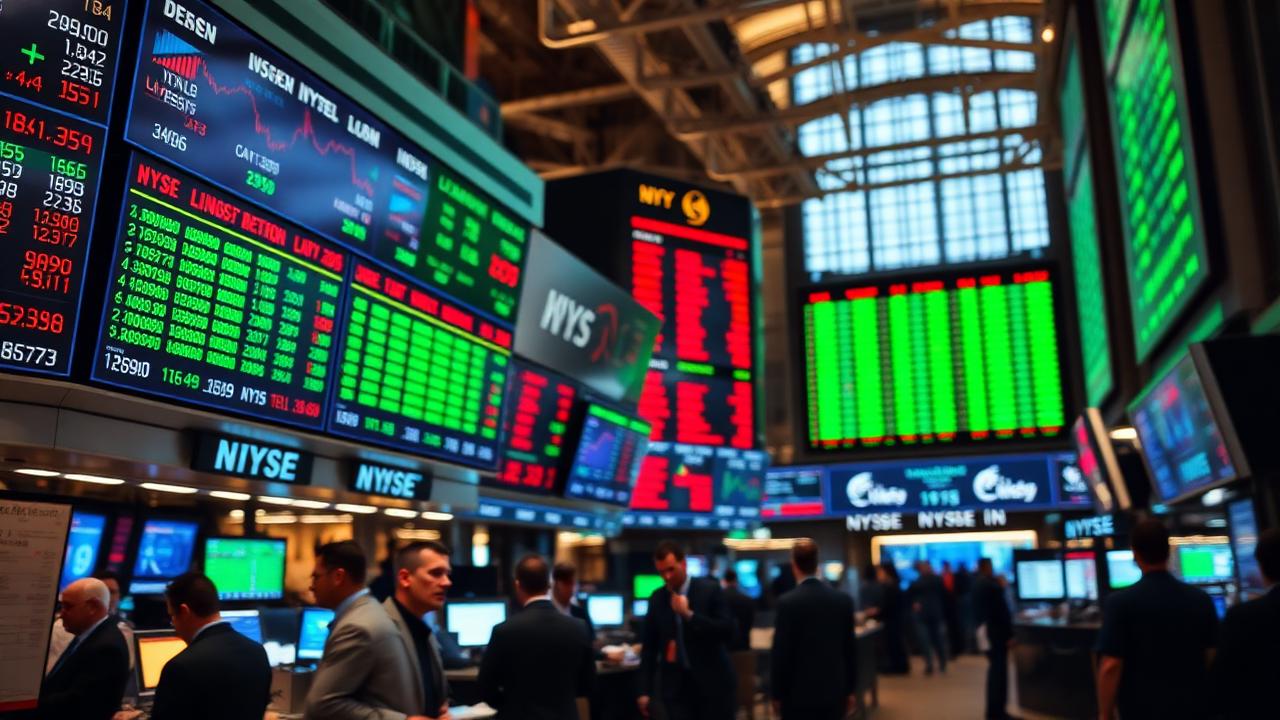
The through-line
Read the stack as a single system and two patterns emerge. First, the money flows downward: the hyperscalers' ~$700 billion in 2026 capital spending becomes orders for networking, then chips, then the memory and the tools that make them. Second, the constraints flow upward: a shortage of high-bandwidth memory caps how many chips ship; a shortage of power caps how many data centers can run at all. The layer everyone watched first was the chips. The layer that may matter most by the end of the decade is the grid.
What the whole stack shares
For all the differences between layers, the same risks recur — and they are worth holding in view across every piece. Concentration: a handful of hyperscalers drive demand for nearly everything, a single customer (OpenAI) anchors an uncomfortable share of some of the largest backlogs, and nearly every advanced chip is fabricated by one company, TSMC. Cyclicality: memory and equipment in particular have long histories of boom and bust. Circular financing: chipmakers, AI labs, and clouds increasingly invest in one another, which can flatter demand. Valuation: many of these names have re-rated sharply, leaving little room for disappointment. None of this is a verdict on the technology — it is the set of questions a careful reader should carry from layer to layer.
Climb the stack
Start anywhere, but the natural path is bottom to top — from the chips that do the work up to the grid that powers them. Each piece stands alone, but together they form one map of how artificial intelligence is actually built, and who builds it.
This article is for information only and is not investment advice or a recommendation to buy or sell any security. TradeRadarNews is not a licensed financial adviser. Figures are accurate as of June 2026 and will change. Do your own research.
Risk Warning: Trading and investing carries significant risk. Your investments can fall as well as rise. CFDs carry high risk of rapid loss due to leverage. Cryptocurrency is not ASIC-regulated and not covered by AFCA. This is information only, not financial advice. Seek independent advice before investing.
Written by
TradeRadarNews Team
Editorial Team
Our editorial team covers markets, fintech, and regulatory developments across Australia and globally.